

We read them every year—the classic Christmas poems that promise comfort, joy, and the gentle magic of the season. The rhetoric in Christmas poetry can offer profound insight into themes of comfort and joy. Yet, beneath the veneer of twinkling lights and sugarplum visions, what if these familiar lines harbor something deeper? Christmas poetry could have something darker and certainly more complex than simple sentimentality?
This is the very essence of exploration when we engage with literature not just as readers but as students of rhetoric and composition. By applying this critical lens to Christmas poetry, we peel back the layers of poetic device, narrative structure, and persuasive language. This helps to uncover the profound mechanics at work.
In this analysis, we take four widely known, copyright-free Christmas poems. These range from the domestic charm of Moore’s famous visitor to the solemn gravity of Longfellow’s bells. We also look at the stark realism of Frost’s introspection and subject them to a vigorous, illuminating examination.
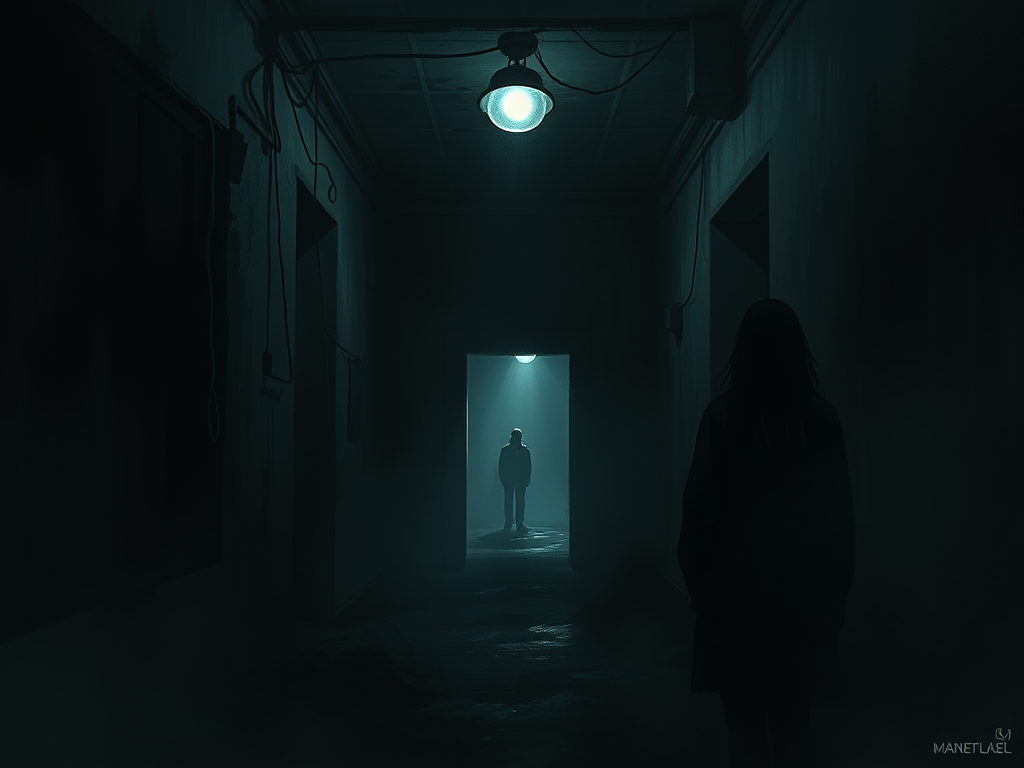
Prepare to journey beyond the festive cheer of Christmas poetry. By drawing connections to ancient Greek literature, where rhetoric and tragedy foundations were laid, and by framing certain imagery through the unsettling perspective of horror tropes, we reveal intricate layers these poets skillfully wove into their work.
A Visit from St. Nicholas
'Twas the night before Christmas, when all through the house
Not a creature was stirring, not even a mouse;
The stockings were hung by the chimney with care,
In hopes that St. Nicholas soon would be there;
The children were nestled all snug in their beds;
While visions of sugar-plums danced in their heads;
And mamma in her 'kerchief, and I in my cap,
Had just settled our brains for a long winter's nap,
When out on the lawn there arose such a clatter,
I sprang from my bed to see what was the matter.
Away to the window I flew like a flash,
Tore open the shutters and threw up the sash.
The moon on the breast of the new-fallen snow,
Gave a lustre of midday to objects below,
When what to my wondering eyes did appear,
But a miniature sleigh and eight tiny rein-deer,
With a little old driver so lively and quick,
I knew in a moment he must be St. Nick.
More rapid than eagles his coursers they came,
And he whistled, and shouted, and called them by name:
"Now, Dasher! now, Dancer! now Prancer and Vixen!
On, Comet! on, Cupid! on, Donder and Blitzen!
To the top of the porch! to the top of the wall!
Now dash away! dash away! dash away all!"
As leaves that before the wild hurricane fly,
When they meet with an obstacle, mount to the sky;
So up to the housetop the coursers they flew
With the sleigh full of toys, and St. Nicholas too—
And then, in a twinkling, I heard on the roof
The prancing and pawing of each little hoof.
As I drew in my head, and was turning around,
Down the chimney St. Nicholas came with a bound.
He was dressed all in fur, from his head to his foot,
And his clothes were all tarnished with ashes and soot;
A bundle of toys he had flung on his back,
And he looked like a pedler just opening his pack.
His eyes—how they twinkled! his dimples, how merry!
His cheeks were like roses, his nose like a cherry!
His droll little mouth was drawn up like a bow,
And the beard on his chin was as white as the snow;
The stump of a pipe he held tight in his teeth,
And the smoke, it encircled his head like a wreath;
He had a broad face and a little round belly
That shook when he laughed, like a bowl full of jelly.
He was chubby and plump, a right jolly old elf,
And I laughed when I saw him, in spite of myself;
A wink of his eye and a twist of his head
Soon gave me to know I had nothing to dread;
He spoke not a word, but went straight to his work,
And filled all the stockings; then turned with a jerk,
And laying his finger aside of his nose,
And giving a nod, up the chimney he rose;
He sprang to his sleigh, to his team gave a whistle,
And away they all flew like the down of a thistle.
But I heard him exclaim, ere he drove out of sight—
“Happy Christmas to all, and to all a good night!”
Christmas Trees
By Robert Frost
(A Christmas Circular Letter)
The city had withdrawn into itself
And left at last the country to the country;
When between whirls of snow not come to lie
And whirls of foliage not yet laid, there drove
A stranger to our yard, who looked the city,
Yet did in country fashion in that there
He sat and waited till he drew us out
A-buttoning coats to ask him who he was.
He proved to be the city come again
To look for something it had left behind
And could not do without and keep its Christmas.
He asked if I would sell my Christmas trees;
My woods—the young fir balsams like a place
Where houses all are churches and have spires.
I hadn’t thought of them as Christmas Trees.
I doubt if I was tempted for a moment
To sell them off their feet to go in cars
And leave the slope behind the house all bare,
Where the sun shines now no warmer than the moon.
I’d hate to have them know it if I was.
Yet more I’d hate to hold my trees except
As others hold theirs or refuse for them,
Beyond the time of profitable growth,
The trial by market everything must come to.
I dallied so much with the thought of selling.
Then whether from mistaken courtesy
And fear of seeming short of speech, or whether
From hope of hearing good of what was mine, I said,
“There aren’t enough to be worth while.”
“I could soon tell how many they would cut,
You let me look them over.”

                                                     “You could look.
But don’t expect I’m going to let you have them.”
Pasture they spring in, some in clumps too close
That lop each other of boughs, but not a few
Quite solitary and having equal boughs
All round and round. The latter he nodded “Yes” to,
Or paused to say beneath some lovelier one,
With a buyer’s moderation, “That would do.”
I thought so too, but wasn’t there to say so.
We climbed the pasture on the south, crossed over,
And came down on the north. He said, “A thousand.”

“A thousand Christmas trees!—at what apiece?”

He felt some need of softening that to me:
“A thousand trees would come to thirty dollars.”

Then I was certain I had never meant
To let him have them. Never show surprise!
But thirty dollars seemed so small beside
The extent of pasture I should strip, three cents
(For that was all they figured out apiece),
Three cents so small beside the dollar friends
I should be writing to within the hour
Would pay in cities for good trees like those,
Regular vestry-trees whole Sunday Schools
Could hang enough on to pick off enough.
A thousand Christmas trees I didn’t know I had!
Worth three cents more to give away than sell,
As may be shown by a simple calculation.
Too bad I couldn’t lay one in a letter.
I can’t help wishing I could send you one,
In wishing you herewith a Merry Christmas.
Christmas Bells
I heard the bells on Christmas Day
Their old, familiar carols play,
    And wild and sweet
    The words repeat
Of peace on earth, good-will to men!

And thought how, as the day had come,
The belfries of all Christendom
    Had rolled along
    The unbroken song
Of peace on earth, good-will to men!

Till ringing, singing on its way,
The world revolved from night to day,
    A voice, a chime,
    A chant sublime
Of peace on earth, good-will to men!

Then from each black, accursed mouth
The cannon thundered in the South,
    And with the sound
    The carols drowned
Of peace on earth, good-will to men!

It was as if an earthquake rent
The hearth-stones of a continent,
    And made forlorn
    The households born
Of peace on earth, good-will to men!

And in despair I bowed my head;
“There is no peace on earth,” I said;
    “For hate is strong,
    And mocks the song
Of peace on earth, good-will to men!”

Then pealed the bells more loud and deep:
“God is not dead, nor doth He sleep;
    The Wrong shall fail,
    The Right prevail,
With peace on earth, good-will to men.”
The Christmas Holly
The holly! the holly! oh, twine it with bay—
   Come give the holly a song;
For it helps to drive stern winter away,
   With his garment so sombre and long.
It peeps through the trees with its berries of red,
   And its leaves of burnish’d green,
When the flowers and fruits have long been dead,
   And not even the daisy is seen,
Then sing to the holly, the Christmas holly,
   That hangs over peasant and king:
While we laugh and carouse ’neath its glitt’ring boughs,
   To the Christmas holly we’ll sing.

The gale may whistle, and frost may come,
   To fetter the gurgling rill;
The woods may be bare, and the warblers dumb—
   But the holly is beautiful still.
In the revel and light of princely halls,
   The bright holly-branch is found;
And its shadow falls on the lowliest walls,
   While the brimming horn goes round.
Then drink to the holly, &c.

The ivy lives long, but its home must be
   Where graves and ruins are spread;
There’s beauty about the cypress tree,
   But it flourishes near the dead:
The laurel the warrior’s brow may wreathe,
   But it tells of tears and blood.
I sing the holly, and who can breathe
   Aught of that that is not good?
Then sing to the holly, &c.
The Unsentimental Truth Under the Mistletoe
We often approach holiday poetry with a protective layer of nostalgia. This allows the sheer familiarity of rhythm and rhyme to prevent deeper inquiry. Christmas poetry, as we have seen through the lens of rhetoric and composition, with references stretching back to the ancient Greeks and modern horror tropes, shows us these works are far more than seasonal wallpaper.
Whether it’s the jarring juxtaposition of hope and conflict in Longfellow’s ringing chimes, or the profound meditation on value and invasion in Frost’s bare woods. Also, Moore’s unsettling encounter with the grotesque and uncanny visitation, or the dark symbolism of eternal life in Cook’s holly. These poems are masterclasses in persuasion and emotional resonance.
They utilize every available poetic and rhetorical device—from anaphora and metaphor to carefully managed pathos and logos. This crafts narratives that endure not just because they celebrate Christmas, but because they capture the complex, beautiful, and often frightening experience of being human.
So, the next time you encounter these classics, look past the sugarplums and the sleigh. See them instead as intricate, layered artifacts of Christmas poetry. They are timeless pieces of composition that offer the best gift of all—a chance to think, to question, and to truly understand the persuasive power of a perfectly chosen word.
I hope this analysis captures the insightful and scholarly tone you’re looking for. If you need any tweaks or additions, let me know!




Leave a Reply