

Welcome Back to the Edge: The Monster Within.
As you gaze into the Abyss, remember that often the Abyss Stares Back at you.
Hello again, and welcome to the third installment of our bi-weekly journey into unsettling quotes! We’ve previously explored the chilling implications of inaction with Burke’s quote. We have also examined the terrifying transformation caused by suffering with Brontë’s words. This week, we confront a different kind of horror: the danger inherent in the fight against darkness itself and what happens when the Abyss Stares Back.
Our guide into this precarious territory is the formidable philosopher Friedrich Nietzsche. He offers a caution from his work Beyond Good and Evil:
“He who fights monsters should see to it that he himself does not become a monster.” – Friedrich Nietzsche
Nietzsche famously follows this immediately with, “And if you gaze long enough into an abyss, the abyss will gaze back into you.” Both lines together paint a truly chilling picture. This is especially true when contemplating the concept of the Abyss Stares Back.
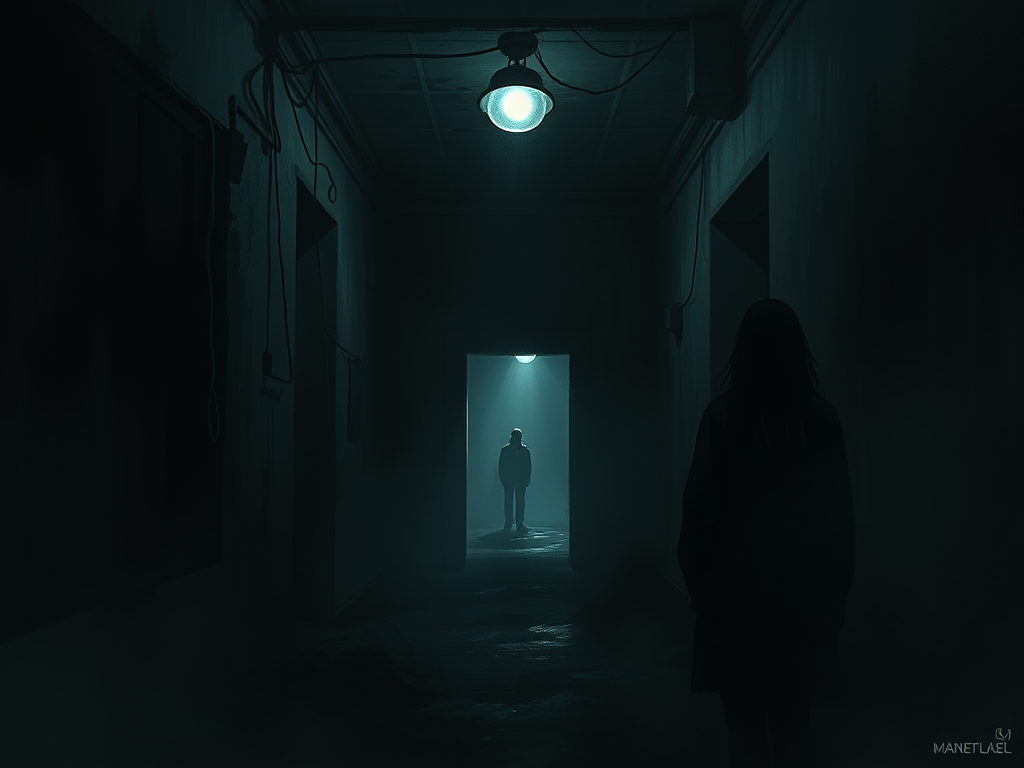
See the warning brought to life in this week’s video:
The Abyss Gazes Back
Nietzsche’s warning is a profound piece of psychological insight wrapped in a potent metaphor. What does it mean?
- The Risk of Mimicry: To effectively combat something monstrous, do we risk adopting its tactics, its ruthlessness, its worldview? Does the fight itself corrupt, leading to the possibility that the Abyss Stares Back?
- The Weight of Witnessing: Constantly focusing on darkness, on the ‘monsters’ of the world (whether literal or figurative – injustice, cruelty, chaos), can take a heavy toll.
- The Loss of Self: The “abyss gazing back” suggests that prolonged exposure to negativity or the ‘void’ isn’t passive. It can actively change the observer, drawing them in, potentially erasing the very principles they sought to defend.
Unlike Burke’s warning against passivity or Brontë’s depiction of cruelty born from suffering, Nietzsche highlights the peril within the active struggle against perceived evil. The creepiness lies in the insidious nature of this transformation. It can lead to the hero becoming the villain or the fighter losing themselves to the fight. There is the terrifying possibility that the darkness we oppose can seep into our own souls, making us wonder if the Abyss Stares Back.
A Necessary Warning?
What do you make of Nietzsche’s caution? Is it inevitable that fighting monsters leaves a mark? How can one engage with darkness or fight injustice without succumbing to this risk? Have you seen examples (in fiction, history, or even personal experience) where this warning seemed to play out? Have you realized that the Abyss Stares Back?
Featured products


Thank you for visiting with us. For more Literature related content, visit our blog at The Ritual.



Leave a Reply