
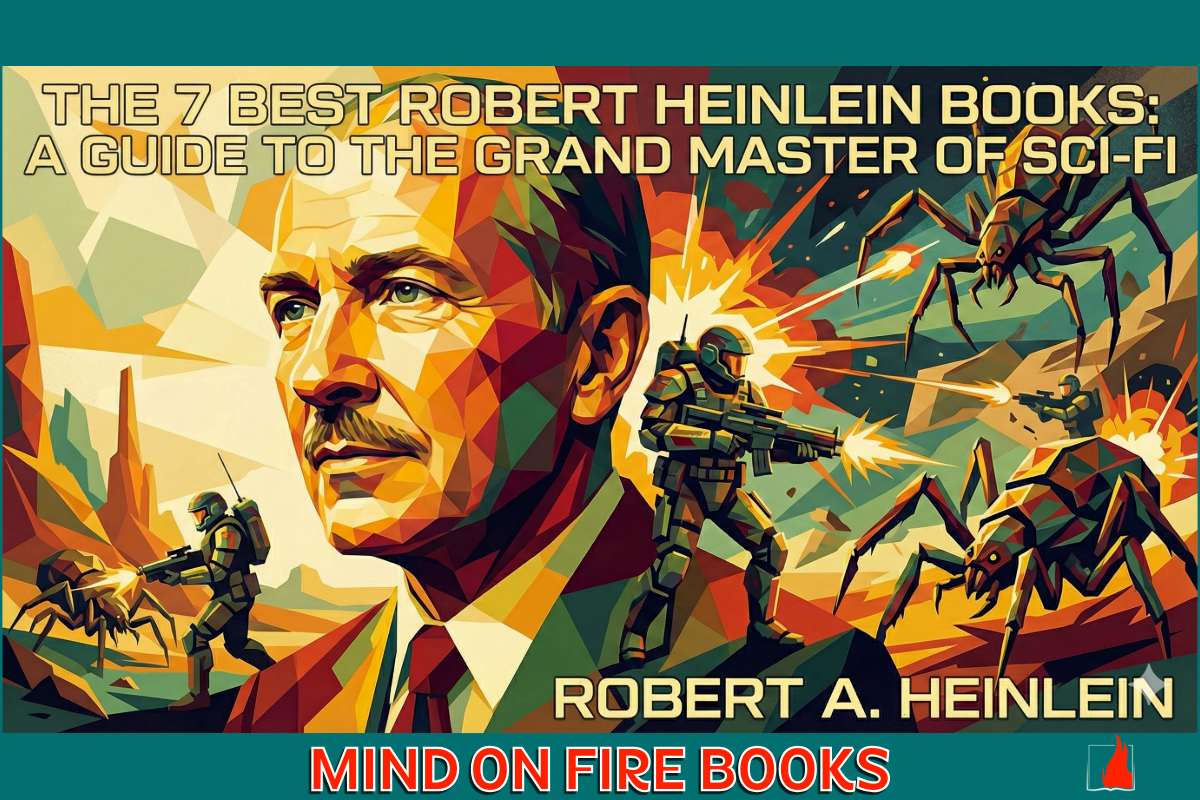
Looking for the best Robert Heinlein books? From Starship Troopers to Stranger in a Strange Land, here are the 7 essential novels by the Dean of Science Fiction.
The Grand Master of Science Fiction: Where to Start with Heinlein
Robert A. Heinlein wrote dozens of novels and short stories over a career that spanned half a century. Along with Isaac Asimov and Arthur C. Clarke, he was considered one of the “Big Three” of science fiction. But with such a massive bibliography, it can be difficult to know where to start.
Below is a curated list of the 7 essential Heinlein novels. These are the titles that are most commonly searched, widely read, and significant in terms of their impact on the genre. Whether you are looking for military sci-fi, counter-culture philosophy, or a gripping space adventure, these books are the pillars of his legacy.
1. Starship Troopers (1959)
The Premise: Perhaps Heinlein’s most controversial novel, Starship Troopers is a military science fiction classic. It follows Juan “Johnny” Rico, a young recruit in the Mobile Infantry, as he trains and fights in an interstellar war between humans and the alien “Bugs.”
Written in the first person as Rico’s memoir, the novel famously depicts powered exoskeleton suits—a pioneering concept in fiction. It delves into the structure of a future society where citizenship is earned strictly through voluntary service.

Why It Matters
If you’ve ever enjoyed powered-armored heroes or alien bug battles in media like Halo or Warhammer 40k, you have this novel to thank. It won the Hugo Award for Best Novel. Also, it shaped the entire subgenre of military SF.
The book’s stance—that duty and sacrifice are paramount—has sparked endless debate. There is discussion about whether it is a defense of meritocratic militarism or a satire. For a deeper look at the darker themes of this novel, read our essay on Dystopian Vision: When Science Fiction and Horror Collide. We examine how Starship Troopers blurs the line between sci-fi and horror.

2. Stranger in a Strange Land (1961)
The Premise: This is Heinlein’s most famous novel outside of genre circles. It is a landmark in 1960s pop culture. It tells the story of Valentine Michael Smith, a human raised on Mars by Martians. Upon returning to Earth, he has no knowledge of human culture.
Possessing psychic abilities and an innocent perspective, Smith becomes a messianic figure, challenging Earth’s social, sexual, and religious mores. This is the book that introduced the word “grok” (to deeply understand) into the English lexicon.
Why It Matters
Stranger in a Strange Land captured the zeitgeist of the countercultural ’60s. It was embraced by hippie culture for its ideas of personal freedom, sexual liberation, and water-sharing communal living. It became the first science fiction novel to make The New York Times Best-Seller list.
While we are currently working on a full standalone review of this massive work, we discuss its themes of social satire in our guide to Science Fiction and the Fantastic.
3. The Moon Is a Harsh Mistress (1966)
The Premise: Often cited by critics as Heinlein’s technically greatest novel, this is a rousing tale of revolution set in 2076. It chronicles a rebellion by the lunar colony (Luna) against the authority of Earth. This rebellion is led by a computer technician, a fiery activist, and a sentient supercomputer named “Mike.”
The novel is famous for popularizing the acronym TANSTAAFL (“There Ain’t No Such Thing As A Free Lunch”). It encapsulates the book’s libertarian themes.
Why It Matters
Whenever you see a story about a space colony pushing for independence—from Babylon 5 to The Expanse—you are looking at the lineage of The Moon Is a Harsh Mistress. It is a unique blend of political thriller, buddy comedy (between man and AI), and hard engineering fiction.

4. The Puppet Masters (1951)
The Premise: Alien parasites from Titan arrive on Earth, attaching themselves to humans to control their minds. The story follows secret agents Sam and Mary. They work under a shadowy government agency to uncover the invasion before humanity is enslaved.
Set in a near-future 2007 (as imagined from 1950), the novel evokes a mood of paranoia and urgency. It serves as a clear allegory for the Red Scare and Cold War anxieties.

Why It Matters
The Puppet Masters helped shape the “body-snatcher” trope in science fiction. It is credited with popularizing the idea of an alien threat that hides within us. This theme has reappeared in everything from The X-Files to Falling Skies. It is Heinlein at his most thrilling—lean, tense, and action-packed.
For more on how this book utilizes fear and paranoia, check out our article on Dystopian Sci-Fi and Horror.
Based on your taste in literature, I think we could be good friends. Sign up below for emails and free eBook giveaways.
5. Have Space Suit—Will Travel (1958)
The Premise: Representing Heinlein’s “Juveniles” (what we would today call Young Adult), this novel centers on Kip Russell, a teenager who wins a used spacesuit in a soap contest. After refurbishing the suit, Kip is accidentally abducted by aliens. He then finds himself on an intergalactic journey to defend humanity’s worthiness before a galactic council.

Why It Matters
This book captures the pure, optimistic sense of wonder that defined the Golden Age of Sci-Fi. It champions the idea that an ordinary kid can survive extraordinary circumstances through scientific literacy and courage. It remains one of the best entry points for readers new to Heinlein.
If you enjoy the aesthetic of this era, browse our Science Fiction & Fantasy archives for more American classics from the 1950s.
6. Time Enough for Love (1973)
The Premise: An ambitious, sprawling work that follows the life of Lazarus Long, the oldest living human. Thanks to longevity treatments, Lazarus has lived for over two millennia. The book is structured episodically, with Lazarus recounting his adventures in love, war, and time travel to a distant-future audience.
Why It Matters
This novel is essential for understanding Heinlein’s “Future History.” It ties together threads from his earlier short stories. Moreover, it represents the culmination of his philosophy on longevity, genetics, and personal freedom. While polarizing due to its provocative themes, it solidified Heinlein’s image as the “Sage” of science fiction. The included “Notebooks of Lazarus Long” remain some of the most quoted aphorisms in the genre.
7. Double Star (1956)
The Premise: Lawrence Smith is a down-on-his-luck actor who is hired to impersonate a prominent politician who has been kidnapped. The fate of interplanetary diplomacy rests on his acting ability. As the charade continues, the vain actor begins to internalize the statesman’s values.
Why It Matters
Double Star won Heinlein his first Hugo Award. It demonstrates his versatility; rather than focusing on engineering or war, this is a story about politics, identity, and personal transformation. It is tightly plotted, humorous, and deeply human.
Stay tuned to Mind on Fire Books for our upcoming “Retro Hugo Winners” series, where we plan to dive deeper into the charm of Double Star.
Studying the world-building of Grand Masters like Robert Heinlein is exactly what inspired me to push the boundaries of my own writing. If you love classic speculative fiction that isn’t afraid to get dark, weird, and visceral, check out my new collection of 10 short stories and 12 poems. Grab your copy of Folklore and Flesh right here.
Which Heinlein novel is your favorite? Did we miss a title that you think belongs in the top 7? Let us know in the comments below! Please visit our blog at The Ritual for related flash fiction.




Leave a Reply