
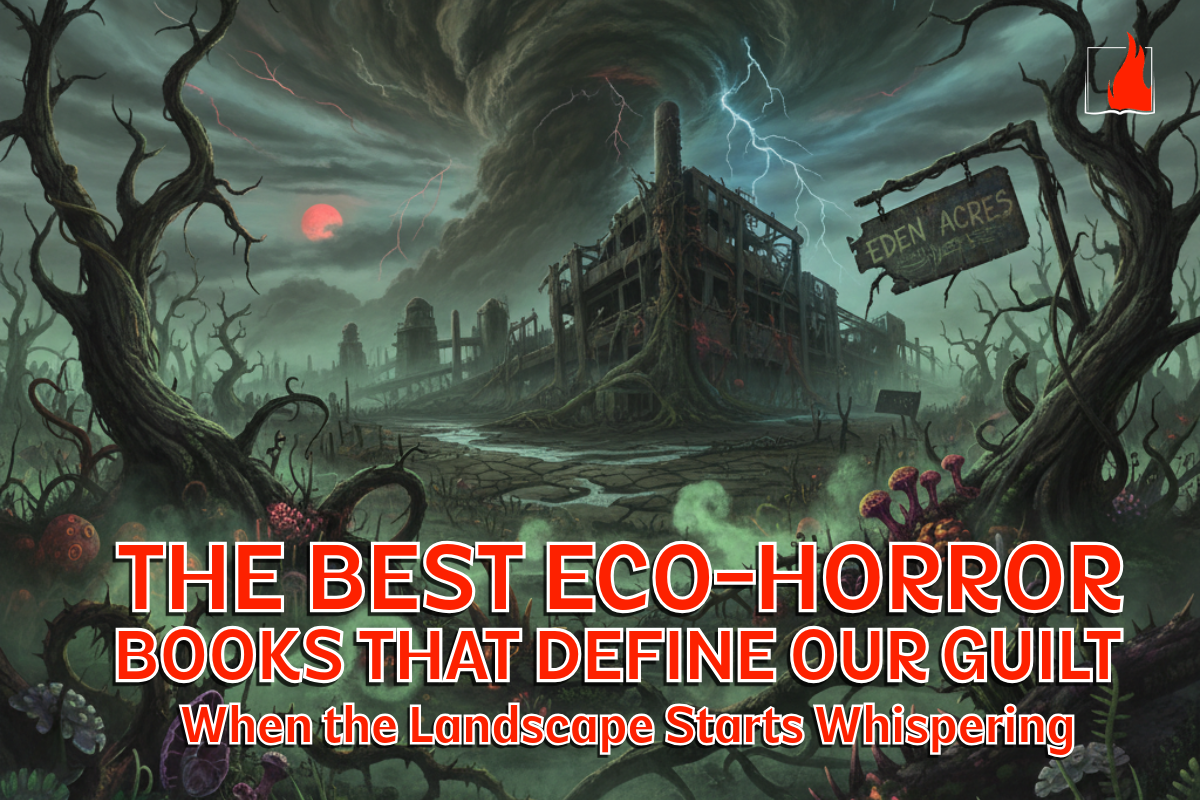
If film gives us the visceral jump-scare of the monster, literature gives us the slow, cold dread of realization. Ecological horror books don’t rely on a sudden shock; they rely on the chilling, deliberate expansion of our own guilt. They turn the familiar comfort of the environment into an elaborate, inescapable trap.
We’re talking about the literary genre where the villain isn’t a shadowy figure in a mask—it’s the relentless, systemic consequence of centuries of human hubris. It’s less horror, more a societal diagnosis. And trust me, the prognosis is bleak. But the reading is fantastic.
Classic Eco-Horror Books: From Mutated Plants to Total Collapse (Pre-2000)
The foundation of eco-horror in literature often centered on the shock of immediate change and the fragility of our industrialized society. These authors understood that true terror doesn’t need a creature; it needs a broken supply chain. This early period often reflected the “revenge-of-nature” narratives. Nature becomes monstrously wronged with humanity at its center.
While Mary Shelley’s Frankenstein (1818) could be argued as the first bio-horror warning against playing God with nature. The mid-20th century delivered the definitive template. John Wyndham’s The Day of the Triffids (1951) is a genius piece of work. It’s not just about carnivorous, ambulatory plants; it’s about a global, self-inflicted blindness event. Society becomes utterly vulnerable to a new, aggressive form of plant life. The horror isn’t the Triffids’ venom, it’s the sudden, irreversible loss of human dominance.
And let’s not forget the sheer, chilling resignation in Nevil Shute’s On the Beach (1957), where nuclear fallout creates a lingering, invisible, and terminal environmental enemy. As Professor Carol Senf notes, these works tap into the fear of “nature’s power—its indifference to human suffering.” These books taught us that the world doesn’t end with a bang or a bite; it ends with slow, silent contamination. Classic Eco-Horror Books: From Mutated Plants to Total Collapse (Pre-2000)

Based on your taste in books, I think we could be great friends! Please sign up for the newsletter below:

Modern Eco-Horror Books: Systemic Breakdown and the Grinding Dread (2000–2015)
As the effects of climate change moved from theory to tangible reality, the literary focus shifted from immediate threat to the long, miserable tail of collapse. This shift aligns with what scholar Olivia Siby calls the “eco-Gothic,” a subgenre of dread rooted in the Anthropocene. This is the age where human activity dominates the environment.
The undisputed champion of this era is Cormac McCarthy’s The Road (2006). The ecological horror has already occurred—the world is dead, covered in ash, and perpetually cold. The novel’s terror comes from the existential vacuum left behind. The only monsters are the humans trying to survive the poisoned landscape. It is the ultimate expression of the planet having already given up on us.

Another essential read is Paolo Bacigalupi’s The Windup Girl (2009). This bio-punk masterpiece focuses on a terrifying future driven by bio-engineering monopolies and catastrophic “gene ripper” plagues. It brilliantly frames our current seed patents and industrial agriculture as the true villain. It shows how weaponized crops and rising sea levels create a new, desperate feudal society. This kind of narrative is powerful. Eco-horror is exceptional at expressing the “rage and fear” we feel about systemic failures like capitalism and colonialism.

The New Wave: Existential and Unknowable Eco-Horror (2016–Present)
The newest wave of literary eco-horror embraces the psychedelic and the unknowable. It’s less about a warning and more about a cosmic, biological mutation that renders human consciousness irrelevant.
Jeff VanderMeer’s Southern Reach Trilogy (starting with Annihilation, 2014) is the perfect example. “The Shimmer” isn’t an alien invasion or a virus; it’s an impossible ecosystem re-writing the laws of physics and biology. Scholar Dawn Keetley’s concept of “tentacular horror” describes this narrative where nature is a fully agentic, dynamic entity that entangles the human. The horror is in the impossibility of defining the enemy. Nature is no longer angry; it’s simply gone beautifully, terrifyingly off-script.

Similarly, T. Kingfisher’s The Hollow Places (2020) explores insidious, quiet corruption in the landscape—a sense that the world itself is subtly wrong, indifferent to human sanity. This recent trend confirms that eco-horror, even as it frightens us, “frequently prompt[s] sympathy for the creatures, which can lead to guilt and anxiety about our responsibility toward the natural world.”

If the classics warned us, this new literature informs us: the planet is changing, and you are not invited to adapt.
Thank you for visiting with me. For more Reviews or Literature related content, visit my blog at The Ritual. Copyright Mind on Fire Books.

Folklore and Flesh: A Dark Fiction Collection of Folklore and Body Horror
Step into the uncanny with Folklore and Flesh—a collection of visceral horror stories and haunting poems that blur the boundaries between myth and the body. From ancient rituals and supernatural transformations to the raw ache of grief and memory, these tales invite you to explore the shadowed places where folklore becomes flesh.
This collection binds 10 creative short stories and a dozen visceral poems.


Leave a Reply