
The Fire in the Fog
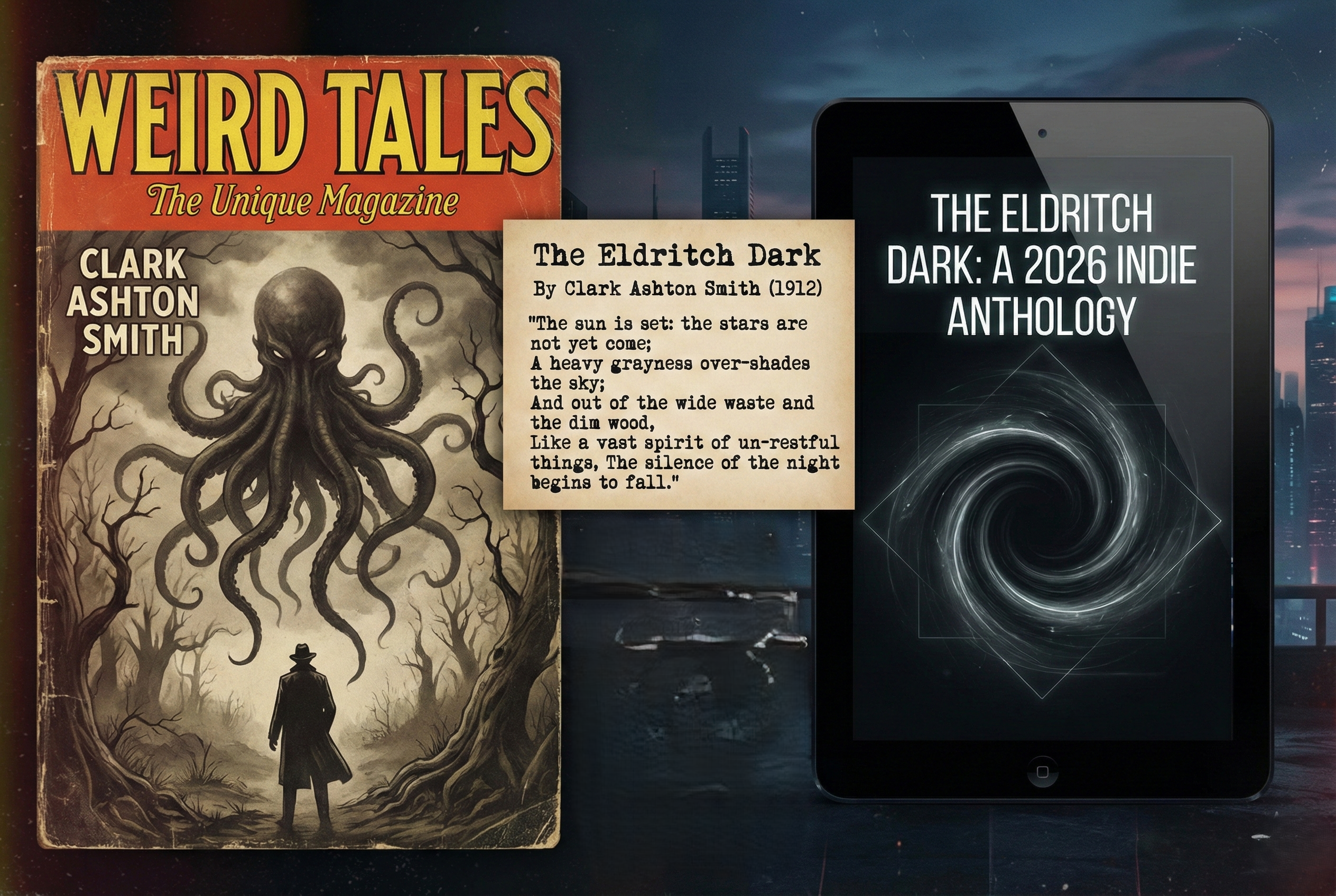
This March, the literary landscape feels like a beautifully haunted house—gothic folklore, hallucinogenic sci-fi, and “woodsy necromancy” are all trending toward a fever pitch. To understand where we’re going, we have to look at the ancestral spirits that built these foundations. Today, we’re spotlighting a giant of the public domain: Clark Ashton Smith.

Trending Now: The March 2026 Dark Horizon
March is leaning “bold, strange, and unapologetically speculative”. We’re seeing a massive wave of gothic fantasy—think Ava Reid’s Innamorata and Avery Curran’s Spoiled Milk—reinvigorating the genre with themes of necromancy and repressed desire. In the sci-fi trenches, humanity is harvesting hallucinogenic fuel from colossal Leviathans in Jupiter’s atmosphere.
This “hallucinogenic” and “decay-focused” aesthetic is a direct descendant of the Cthulhu Mythos. Moreover, it reflects the sardonic, cruel beauty of Clark Ashton Smith’s prose.
Featured Public Domain Work: “The Eldritch Dark”
Clark Ashton Smith, a contemporary of H.P. Lovecraft, was the master of the “prose poem”—short, atmospheric bursts of cosmic dread that are perfect for sharing on social media.
The Eldritch Dark By Clark Ashton Smith (1912)
"The sun is set: the stars are not yet come;
A heavy grayness over-shades the sky;
And out of the wide waste and the dim wood,
Like a vast spirit of un-restful things,
The silence of the night begins to fall."

Why This Works for Indie Authors Today
For the indie lit community, Smith’s work is more than just a creepy poem; it’s a blueprint for world-building. His focus on “cruelty, sorcery, and horror” rather than mere bloodshed is exactly what’s driving the “Gothic Folklore” trend. As we prepare for the release of trench-warfare-meets-fae-mythology titles like Richard K. Morgan’s No Man’s Land later this month, Smith’s “Eldritch Dark” reminds us that the most effective horror often lies in the silence before the stars come out.
What’s haunting your TBR pile this month? Are you diving into the “insect horror” of T. Kingfisher’s Wolf Worm or sticking to the classics? Let’s set the conversation on fire in the comments.
Please visit our blog at The Ritual for related research on the Rhetoric of Fear.




Leave a Reply