
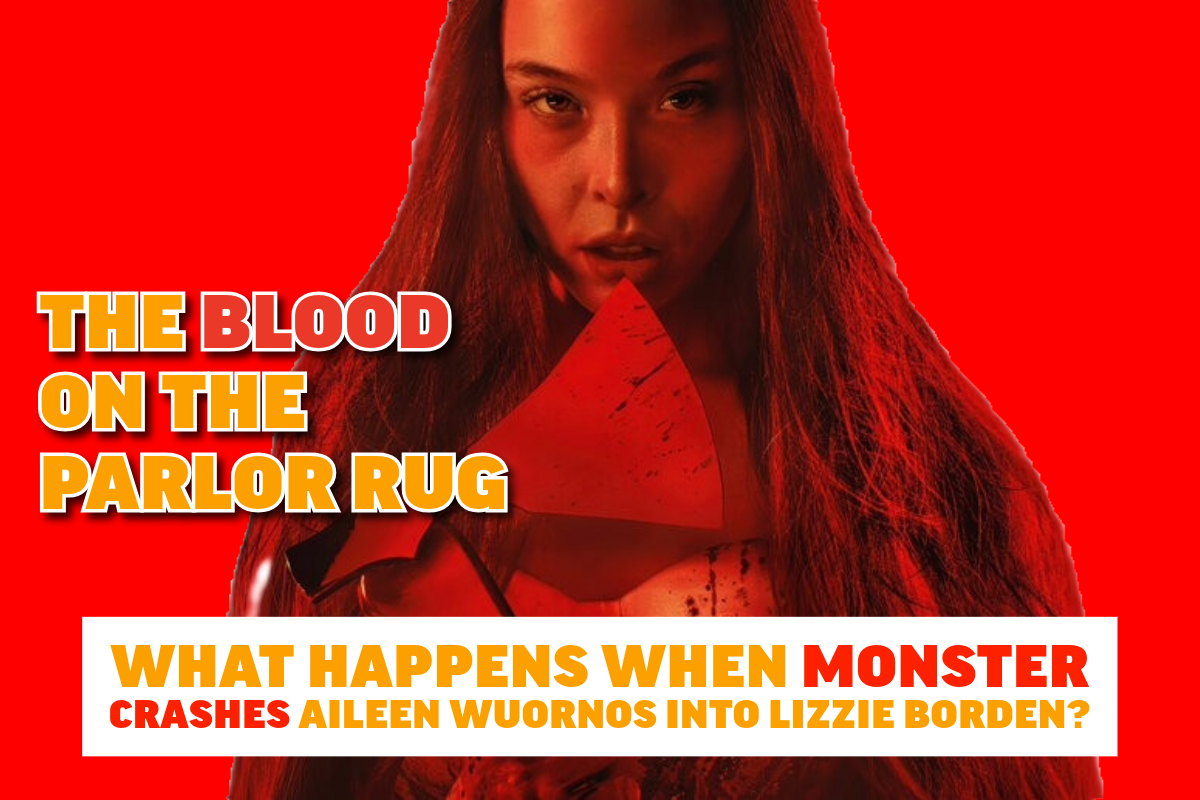
I burned through Monster: The Lizzie Borden Story in under a week. Here’s my Monster The Lizzie Borden Story review.
For the first few episodes, I was locked in. The suffocating Victorian heat of Fall River, the ticking grandfather clocks, the boiled mutton, and Ella Beatty’s quiet, insolent Lizzie Borden made for razor-sharp psychological drama.
Then the show dropped a flash grenade into its own parlor: Sarah Paulson as Aileen Wuornos—screaming, chain-smoking, and bleached out on Florida asphalt.
Suddenly, we weren’t just watching a 19th-century parricide mystery. We were tumbling through a fever dream where late-century roadside wreckage crashes into New England repression. Wuornos checks into the Borden bed-and-breakfast, shoots up in Lizzie’s childhood bedroom, and hallucinates Abby Borden’s ghost while hooking up on the parlor sofa.
The whiplash was violent. I sat on my couch wondering: Did this show just jump the most surreal shark on television, or is it trying to pull off an intellectual magic trick I’m missing?
The Collision: Silk Stays vs. Florida Asphalt
The immediate friction is sensory. Victorian civility on screen works through restraint—fury trapped behind velvet drapes and corsets. Wuornos brings zero civility. She is raw nerve, cheap motels, and gutter fury. Dropping her into Lizzie’s world feels like running a chainsaw through a string quartet.
Narratively, you see the ambition. The writers weren’t interested in another dry procedural about hatchet blades. They wanted an unbroken lineage of female retaliation: Elizabeth Báthory inspires Lizzie Borden; Lizzie Borden inspires Aileen Wuornos. It argues the cage never changed—only the lock did.
As a thought experiment, it’s provocative. As a story, it snaps the narrative spine in half.
The Moral Laundromat: Absolving Parricide
Here is where the premise turns morally dizzying in this Monster: the Lizzie Borden Story review.
To forge this mythic sisterhood, the script quietly launders cold-blooded murder. The arc constructed for Lizzie suggests an unsettling subtext: Strike down the tyrannical father, take the estate, embrace your queerness, and fund a matriarchal haven at Maplecroft—and your butchery is cleansed.
The show wraps parricide in cinematic lighting and the triumphant halo of liberation. But Abby Borden was hacked nineteen times while folding laundry. Andrew Borden had his face split open while sleeping on a sofa. They weren’t abstract totems of the patriarchy; they were human beings killed in cold blood. Giving parricide a feminist halo doesn’t make it radical—it makes it grotesque.
Based on your taste in literature, I think we could be good friends. Sign up below for the archive below and free eBook giveaways.
The Class Trap: An Heiress Is Not a Drifter
The cross-era bleed also creates a massive blind spot around class.
Lizzie Borden was an affluent heiress whose social standing was her bulletproof vest. An all-male Victorian jury acquitted her because they could not conceive of a churchgoing woman in fine silk swinging a hatchet. Her privilege bought her freedom and an estate.
Aileen Wuornos had no parlor and no inheritance. She was an impoverished, chronically abused street survivor navigating highway asphalt. When she shot seven men, she was drowning in survival panic. Society didn’t protect her; it demonized her and strapped her to a gurney.
Flattening them into the same “frequency of rage” is dishonest. Borden’s calculated strike for financial autonomy is not the same beast as Wuornos’s chaotic, predatory survival. Conflating the two doesn’t honor Aileen’s tragedy—it turns her real-life ruin into an aesthetic accessory.

The Magical Realism Fog Machine
Whenever the reality of the violence gets too ugly to fit a modern political message, the show retreats into magical realism. Communing across time lets the script dodge the real corpses left rotting in the Florida scrub and the pool of blood on the New England floorboards. It trades the hard, uncomfortable work of examining human monstrosity for an aesthetic dark fairy tale.
I watched every minute of it, captivated and disturbed in equal measure. But it leaves behind urgent questions:
- Did pulling Aileen Wuornos into 1892 elevate the story, or did it break your immersion completely?
- Is the series interrogating female rage, or is it secretly validating murder under the banner of matriarchal payback?
- Can we examine the trauma that produces violent women without turning killers into folk heroes?
Drop your take below. Let’s dig into it.
Enter your coordinates to receive our monthly dispatches, unvarnished craft essays, and intellectual ammunition for the high-functioning mind. No spam.
Monster The Lizzie Borden Story review.


Leave a Reply