
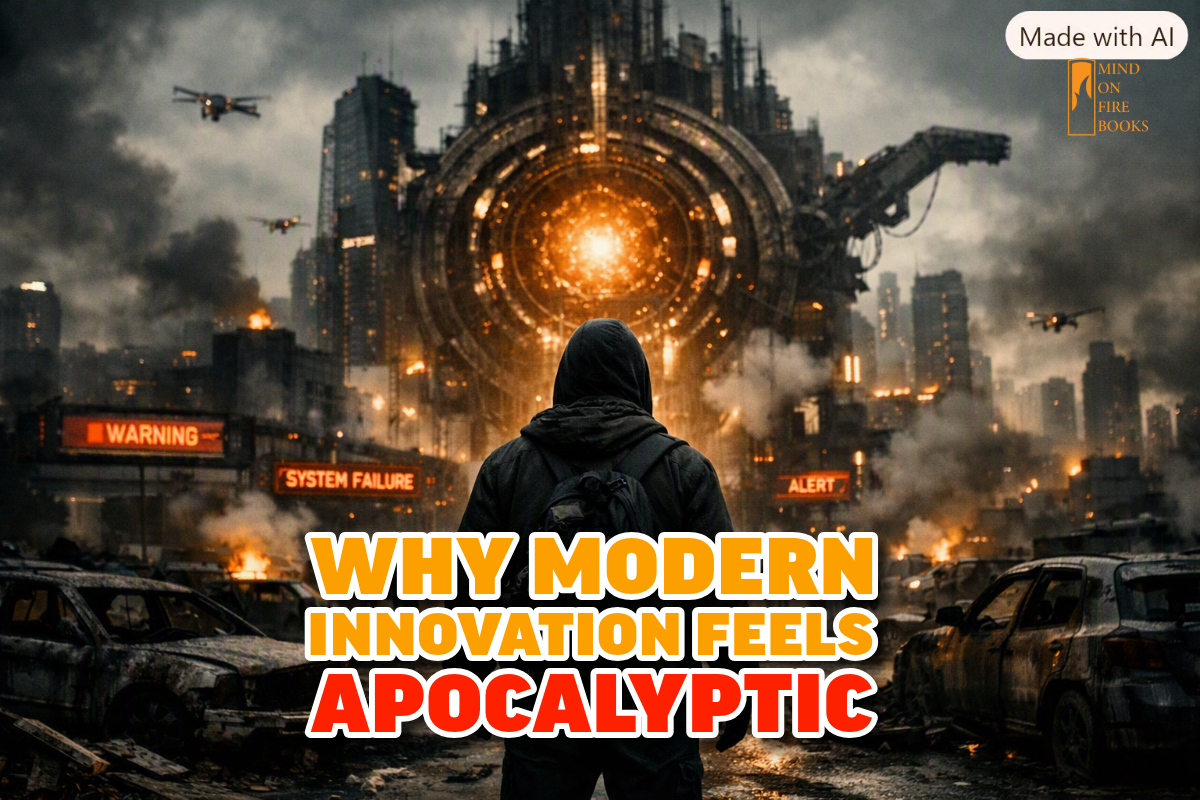
We have erected an altar of cold silicon, and upon it, we are laying the living consciousness of our youth. This loss of wonder is one of the most striking consequences of dystopian tech culture. This is not technological disruption; it is an ontological harvest. A bloodless Saturn sits inside the nursery, unhinging its jaws to devour the imagination, the intuition, and the sacred wildness of our children before they have even learned to look up at the stars.
Look into the dead blue phosphor (your phone) washing over their faces. The soft marrow of their interior lives is being systematically scraped out by indifferent mathematics. The machine does not synthesize; it cannibalizes.
The Architecture of the Panic
Read those two paragraphs again. Feel the elevated pulse? The faint, primal impulse to snatch your phone from the table and throw it out the nearest window?
That is not an assessment of artificial intelligence. That is classical fear architecture doing its job.
When rhetoricians want to paralyze analytical thought, they bypass the cerebral cortex and aim straight for the amygdala. To understand why modern discourse around generative technology feels less like computer science and more like an Old Testament trial, you have to examine the precise levers that transform technological friction into mythological terror.
And for some reason, studying fear appeals and rhetoric has been at the forefront of my mind since Grad school.

The Moloch Transference (Scale to Spirit)
When an issue is vast, complex, and bureaucratic, human intuition stalls out. Nobody riots over a shifting supply-chain paradigm or automated database latency. But invoke the image of children sacrificed to a metal god—a motif immortalized from antiquity straight through to Allen Ginsberg’s Howl
—and the conversation shifts from economics to existential war.
In classical persuasion, this is the ultimate application of pathos, mapped systematically in Aristotle’s Rhetoric:
“The emotions are all those feelings that so change men as to affect their judgements, and that are also attended by pain or pleasure.”
By framing neural networks not as statistical models but as conscious, devouring entities, the rhetorician replaces boring nuance with an unyielding moral binary: protect the sacred bloodline or surrender to the beast.
High Threat, Zero Efficacy (The Psychological Lock)

In communication theory, the Extended Parallel Process Model (EPPM) explains how audiences react to existential danger. A persuasive fear appeal requires two components:
- Perceived Threat: How severe and likely the catastrophe is.
- Perceived Efficacy: Whether the audience believes they have a clear, actionable way to stop it.
When fear rhetoric paints an apocalyptic threat (“the irreversible theft of the human soul”) without offering a proportional, realistic defense, the audience enters what psychologists call fear control. They don’t solve the problem; they seek emotional containment through panic, outrage, or tribal retreat. The rhetoric is designed not to mobilize thoughtful action, but to enforce ideological compliance.
The Purity Inversion
Every moral panic surrounding emerging tools—from the condemnation of the written word in Plato’s Phaedrus to the mid-century dread chronicled in Neil Postman’s Technopoly —hinges on a perceived loss of spiritual innocence. The machine is always painted as sterile, inorganic, and parasitical; the human mind is cast as a fragile, pastoral sanctuary under siege.

Auditing the Temperature
Fear is the cheapest paint in the writer’s toolbox. It grabs attention immediately because human survival hardwired us to mistake high-volume alarm for high-value insight.
The task of the critical mind isn’t to dismiss technological risks—which are tangible, structural, and immense. The task is to refuse the emotional anesthesia of moral panic. The next time a headline or an essay sets your room on fire with apocalyptic dread, don’t just look at the monster they’ve drawn.
Look at the hands holding the brush.

Thank you for visiting with me. For more Reviews or Literature related content, visit our blog at The Ritual. Copyright Mind on Fire Books.
Based on your taste in literature, I think we could be good friends. Sign up below for the archive below and free eBook giveaways.





Leave a Reply