
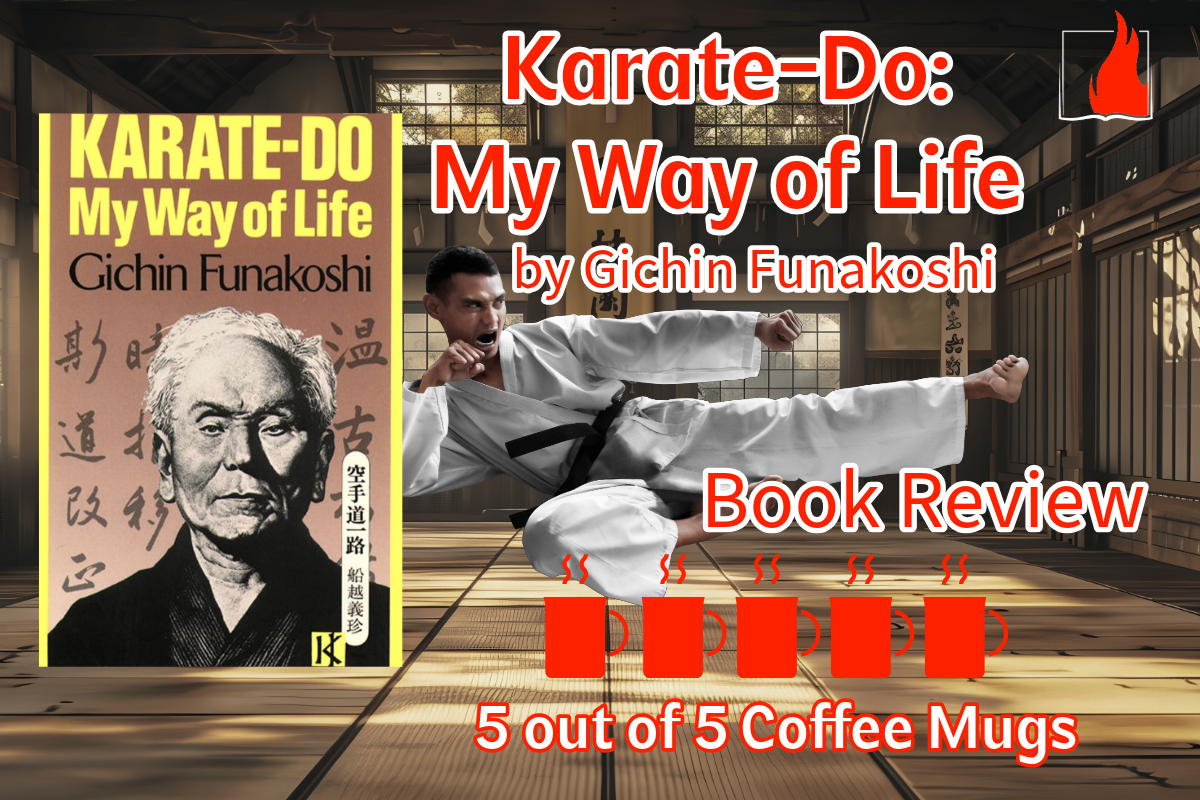
I recently had the pleasure of reading Karate-Do: My Way of Life by Gichin Funakoshi, narrated by Luke Erlenbusch. It felt like embarking on both a personal exploration and a journey through history. From the very first pages, Funakoshi’s words invite you to see martial arts as more than a series of physical techniques. In his own reflective style, he reminds us,
“When you look at life, think in terms of karate. But remember that karate is not only karate — it is life.”
I score this book a 5 out of 5 coffee mugs for originality!
This idea really struck a chord with me. It reinforced the notion that the philosophies embedded in the art carry profound lessons for daily living. Because this book is jam packed with knowledge and wisdom, I thought I would use more quotes than normal in this review of Karate-Do: My Way of Life by Gichin Funakoshi.
What I appreciated most about the book were the countless insights it offered on growth and perseverance. Funakoshi doesn’t just outline movements. He illuminates the evolution of karate from its humble, almost clandestine origins in Okinawa to the disciplined, global practice we see today. He encompasses the historical journey with reflections like,

Karate-Do: A Journey of Life and Wisdom continued Book Review
“To search for the old is to understand the new.”
This reminder—that understanding our past is essential to appreciating our present techniques—beautifully complements my own experiences as a boxing coach in a modest home garage. The idea that even the most refined art began in discreet beginnings adds a layer of inspiration to every training session.
Throughout the memoir, Funakoshi imparts lessons that go far beyond physical prowess. As he so wisely observes,
“Only through training will a person learn his own weaknesses… He who is aware of his weaknesses will remain master of himself in any situation.”
Based on your taste in books, I think we could be great friends! Please sign up for the newsletter below:
This quote resonates deeply with me. In my own coaching and personal journey, it’s clear that genuine improvement stems from recognizing our limitations. Moreover, we must work to overcome them through persistent, mindful practice. The book’s emphasis on real-world learning—what he sums up succinctly with,
“What you have been taught by listening to others’ words you will forget very quickly; what you have learned with your whole body you will remember for the rest of your life” reinforces that embodied experience is at the heart of mastery.
Funakoshi’s narrative also delves into the qualities that define not only a skilled martial artist but a well-rounded human being. He emphasizes that
“The ultimate aim of Karate lies not in victory or defeat, but in the perfection of the character of its participants.”
This sentiment encapsulates the book’s core message: that martial arts, at their best, are a journey toward personal excellence and inner harmony. Such reflections provide invaluable guidance for anyone—whether you’re a coach, a practitioner, or simply someone seeking a story of dedication and transformation.

Karate-Do: My Way of Life is an inspiring and informative read that intertwines the evolution of karate with timeless wisdom. It focuses on self-discipline, respect, and the ceaseless pursuit of personal growth. Funakoshi’s work serves as both a historical account and a practical manual for living a meaningful, mindful life. Reading it has not only broadened my perspective on martial arts but also deepened my understanding of what it truly means to train both the body and the mind.
Reflecting on these lessons makes you wonder how the spirit of karate can inform our modern practices in coaching, mindfulness, and everyday resilience. After all, as Funakoshi teaches us, each step in our practice shapes us into better, more balanced individuals. Each challenge faced and overcome contributes to our growth.
About the author of Karate-Do:
GICHIN FUNAKOSHI, a renowned Karate master born in 1868 in Shuri, Okinawa, was pivotal in popularizing Karate through public demonstrations and writings, such as Karate-do: My Way of Life. A trained educator, he led the Okinawa Association for the Spirit of Martial Arts. Additionally, he showcased Karate at the First National Athletic Exhibition in Tokyo in 1922, introducing it to Japan and beyond. Funakoshi passed away in April 1957.
Thank you for visiting with us. For more Reviews or Literature related content, visit our blog at The Ritual. Copyright Mind on Fire Books.





Leave a Reply