How Coffee and Extreme Caffeine Fueled These 6 Iconic Writers
For some of history’s greatest writers, coffee wasn’t just a drink—it was a brutal, essential tool for unlocking peak creativity. The habits they cultivated were astonishing, and sometimes dangerous. Discover the extreme caffeine routines that fueled literary masterpieces, from Honoré de Balzac, who reportedly drank 50 cups a day (and even ate the grounds), to…
If you’re reading this with a cup of coffee in hand, you’re in good company. For many writers, that dark, bitter brew isn’t just a morning jolt—it’s the chemical backbone of their creative life, the daily ritual that forces the muse to show up.
But while most of us settle for a mug or two, some of history’s greatest literary figures pushed their consumption to astonishing, and sometimes dangerous, extremes. For them, coffee was less a drink and more a brutal, essential tool for unlocking their deepest creative flow.
From the French novelist who ate dry coffee grounds to the Danish philosopher who built a sugar mountain in his cup, here are the extreme caffeine habits that fueled literary masterpieces.
1. Honoré de Balzac: The Destroyer
The French novelist and father of literary Realism, Honoré de Balzac (1799–1850), took his coffee habit to suicidal extremes, claiming it was the key to his prolific output, La Comédie humaine (The Human Comedy).
The Habit
Balzac reportedly consumed between 40 and 50 cups of strong black coffee a day while on a writing binge. He maintained a grueling schedule: waking at 1:00 AM, writing for seven hours, taking a short nap, and resuming work until 4:00 PM.
When brewed coffee no longer provided the desired intensity, Balzac escalated. He began consuming finely pulverized, dry coffee grounds on an empty stomach to maximize the immediate, brutal impact.
The Quote
Balzac left a vivid, almost manic description of caffeine’s effect on his mind in his essay, The Pleasures and Pains of Coffee:
“Ideas quick-march into motion like battalions of a grand army to its legendary fighting ground, and the battle rages. Memories charge in, bright flags on high; the cavalry of metaphor deploys with a magnificent gallop; the artillery of logic rushes up with clattering wagons and cartridges.”
Tragically, many historians believe his extreme coffee consumption, along with his volatile lifestyle, contributed to his death at age 51.
2. Voltaire: The Immortal
The Enlightenment philosopher François-Marie Arouet, better known as Voltaire(1694–1778), was notorious for his astronomical consumption, yet his story proved a defiant rebuttal to health warnings.
The Habit
Voltaire is said to have consumed 30 to 40 cups of coffee daily, often mixing it with rich chocolate (essentially, pioneering the world’s first extreme mocha). He was a regular fixture at the famous Parisian café Le Procope, which became a nexus for revolutionary ideas fueled by coffee.
When his doctor warned him that coffee was a “slow poison” and would be the death of him, Voltaire, who lived to the extraordinary age of 83, famously replied:
The Quote
“Yes, it is a remarkably slow poison. I have been drinking it every day for more than seventy years.”
Voltaire’s extreme coffee habit became a symbol of his non-conformity and the tireless energy he devoted to challenging the status quo.
3. Søren Kierkegaard: The Absurdist
The Danish philosopher Søren Kierkegaard (1813–1855) brought a truly theatrical, ritualistic element to his caffeine addiction, reflecting the intellectual depth—and absurdity—of his own work.
The Habit
Kierkegaard’s biographer, Joakim Garff, detailed his “quite peculiar way of having coffee.” The philosopher would first fill a coffee cup with sugar until it was mounded high above the rim, resembling a white, snow-capped pyramid. He would then slowly pour a cup of incredibly strong, black coffee over the sugar, watching the mountain of white crystals dissolve into a syrupy, concentrated stimulant before gulping the whole thing down. He also possessed a collection of nearly 50 different coffee pots and cups, insisting his secretary select a specific one each day with a valid philosophical reason.
The Takeaway
For Kierkegaard, the exaggerated ritual was key. The sheer impossibility of the drink—a cup that was 90% sugar—was an act of faith and paradox, perfectly matching the themes of his own existential philosophy.
Subscribe to our newsletter to receive all the updates and giveaways!
Unlike his 19th-century counterparts who courted chaos, the contemporary Japanese novelist Haruki Murakami (1949–) uses coffee as the anchor for a rigorous, methodical routine built for endurance.
The Habit
Murakami treats his creative process like a marathon. When in novel-writing mode, he wakes before 5:00 AM and works for five to six hours. The morning is dedicated to writing, fueled by coffee, before he transitions to physical exercise (running 10km or swimming 1500m).
“I keep to this routine every day without variation. The repetition itself becomes the important thing; it’s a form of mesmerism. I mesmerize myself to reach a deeper state of mind.”
For Murakami, coffee is not the destructive muse, but the reliable, bitter sacrament that facilitates a mental state of “mesmerism”—a flow state achieved through sheer, caffeinated repetition.
Unearth More Bookish Treasures
MyPuzzle Bigfoot
Blank Spell Book of Shadows Journal Little Witch
DIY Book Nook Kit Garden House, DIY Miniature Booknook Kit 3D Creative Decorative Bookend Bookshelf
5. Gertrude Stein: The Philosopher of the Mug
American expatriate writer Gertrude Stein (1874–1946) valued coffee not just for its stimulating properties, but for the social and reflective time it created.
The Habit
Stein and her partner, Alice B. Toklas, hosted influential literary salons in Paris that included Ernest Hemingway and F. Scott Fitzgerald. The gatherings were famously centered around conversation, ideas, and, critically, endless cups of coffee.
For Stein, coffee was inextricably linked to the unhurried reflection necessary for her stream-of-consciousness, modernist style.
The Quote
“Coffee gives you time to think. It’s a lot more than just a drink; it’s something happening. Not as in hip, but like an event, a place to be, but not like a location, but like somewhere within yourself.”
Stein viewed coffee as a mental space—a quiet moment of pause essential for accessing the deeper, more original parts of the mind.
6. L. Frank Baum: The Enthusiast
The author of The Wonderful Wizard of Oz, L. Frank Baum (1856–1919), was a champion of robust coffee and a dedicated morning routine.
The Habit
Baum reportedly drank four or five cups of black coffee every morning. He was meticulous about the strength, preferring his brew so potent that, as the anecdote goes, “you could float a spoon on it.” He would consume this heavy dose of caffeine before taking a routine walk in his garden for inspiration, ensuring his mind was fully primed before sitting down to write.
The Takeaway
Baum’s routine shows the classic writer’s use of caffeine as a lever for mental intensity. He used a massive morning dose to jump-start his brain, then paired it with physical activity to generate the unique ideas that would eventually transport generations of children to the magical land of Oz.
The Final Brew: Coffee as a Tool, Not a Muse
What these routines reveal is that caffeine, much like any powerful substance, isn’t the source of genius—it’s the fuel for the discipline, the anchor for the routine, and the catalyst for the focus required to sit down and do the work.
Whether you prefer Balzac’s dangerous consumption or Murakami’s meditative approach, the message from the masters remains the same: Find your stimulant, find your ritual, and fire up your own mind on coffee. Sources
Thank you for visiting with me. For more Poetry or Literature related content, visit my blog at The Ritual. Copyright Mind on Fire Books.
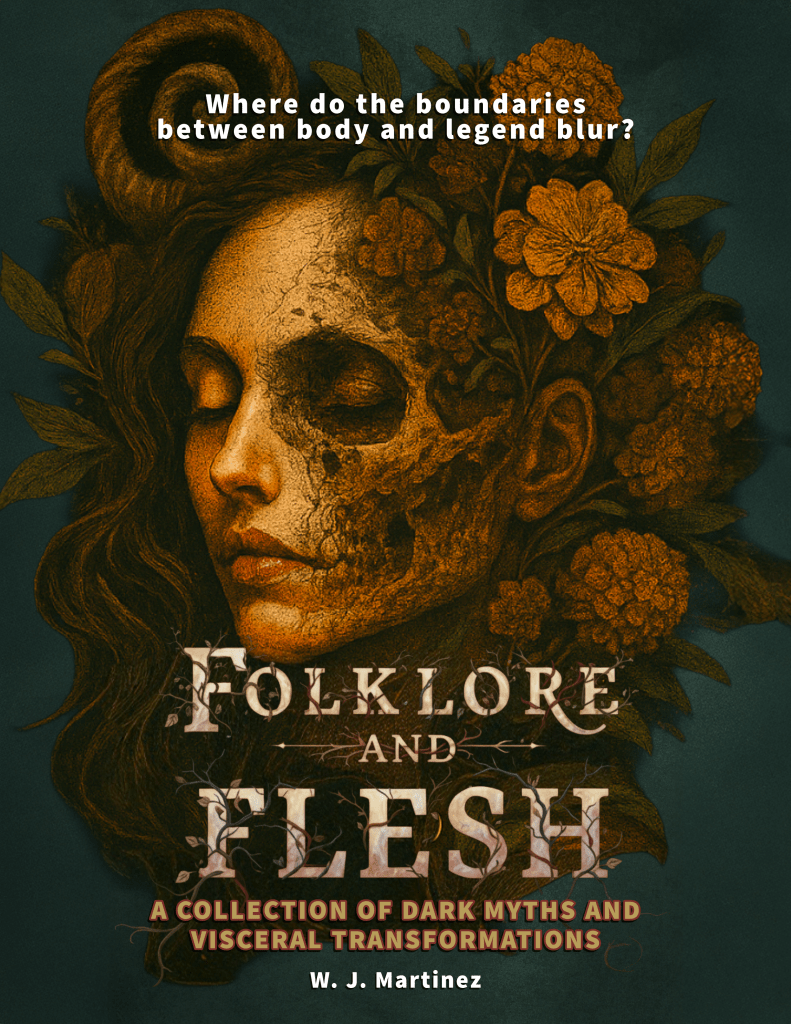
Folklore and Flesh: A Dark Fiction Collection of Folklore and Body Horror
Step into the uncanny with Folklore and Flesh—a collection of visceral horror stories and haunting poems that blur the boundaries between myth and the body. From ancient rituals and supernatural transformations to the raw ache of grief and memory, these tales invite you to explore the shadowed places where folklore becomes flesh.
This collection binds 10 creative short stories and a dozen visceral poems.






Leave a Reply