
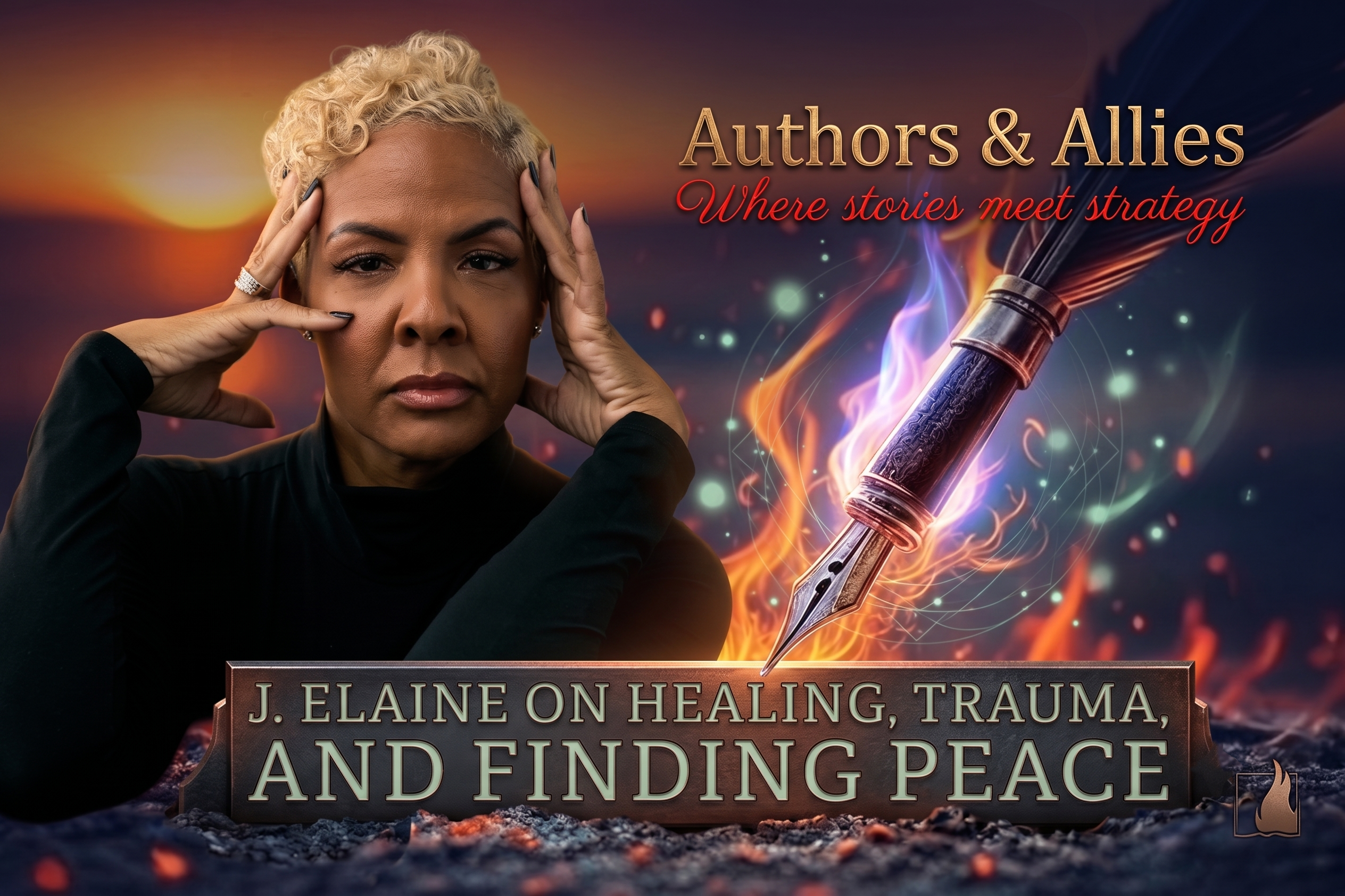
Today, we are slowing down and stepping into the deeply moving, emotional world of J. Elaine, the author behind the powerful debut novel Beyond the Fireworks. J. Elaine explores the quiet moments after the noise fades, centering her work on trauma, survival, and the profound shift when a woman realizes she deserves more than just surviving.
Following her protagonist, Celine, the story navigates the heavy realities of domestic violence and healing. J. Elaine handles these themes with immense care, focusing on emotional truth and creating a narrative grounded in dignity rather than drama.
Are you living, or are you just surviving the fallout?

Interview with J. Elaine
The Spark in the Silence
Willy: Let’s dive right into the heart of the book. What was the initial spark that inspired you to put pen to paper and write Beyond the Fireworks?
J. Elaine: I was inspired by the quiet moments we don’t talk about enough — the ones after the noise fades. The moments when you’re lying awake replaying your life, wondering how you got here and whether you’re brave enough to change it. I wanted to explore what it feels like to love deeply, endure silently, and slowly awaken to your own truth. The story came from a desire to honor that internal shift — the moment a woman realizes she deserves more than survival.

Riding the Waves of Trauma
Willy: Your novel has such a poetic quality, moving readers through Celine’s journey with a distinct rhythm and flow. Why did you choose this style to tell a story centered around such heavy themes like domestic violence and healing?
J. Elaine: That rhythm felt natural to me. Trauma and memory aren’t linear — they move in waves. Sometimes soft, sometimes sharp. I wanted the prose to mirror Celine’s inner world — reflective, emotional, layered. The poetic style allows readers to feel the story rather than just follow it, inviting them inside her thoughts instead of standing at a distance. I focused more on emotional truth than graphic detail. The internal conflict, the silence, the confusion – those are often the most honest parts. The goal was dignity, not drama.
Surviving the Writing Process
Willy: Writing about abuse must have been incredibly taxing. Were there scenes that were particularly difficult to tackle, and how did you approach the emotional weight of those moments?
J. Elaine: Yes, especially the abuse scenes, which were emotionally heavy. What made them difficult wasn’t just what was happening, but what wasn’t being said. I had to sit with discomfort and allow silence to carry weight. I resisted the urge to resolve the tension too quickly, which was hard restraint, but necessary.
Willy: With such emotionally charged writing, did your characters ever begin to feel autonomous, or were you consciously guiding their paths the whole time?
J. Elaine: Absolutely. There were moments when I thought I knew where a scene was going, and a character’s emotional truth shifted it. That’s one of the most beautiful parts of writing — when the story begins to breathe on its own.
Decoding the Fireworks
Willy: The title Beyond the Fireworks is such a striking symbol. Early on, it reflects Celine’s fear, but it eventually shifts into something more hopeful. What do the fireworks mean for her overall journey?
J. Elaine: Fireworks represent anticipation, that tense waiting for something explosive to happen. Early in the novel, they mirror Celine’s anxiety, the sense that something could go wrong at any moment. But over time, the meaning shifts. Fireworks also hold beauty, light, possibility. The title speaks to what exists beyond that spectacle – beyond fear, beyond chaos. It’s about finding clarity after the noise fades.

A Message for the Next Generation
Willy: You dedicated this beautiful debut to your daughters. If they, or any of your readers, take away one central lesson from Celine’s story, what do you hope it is?
J. Elaine: I hope they understand that love should never require them to abandon themselves. That strength isn’t about how much you can endure — it’s about knowing when to choose yourself. I hope readers walk away feeling less alone. Whether they’ve experienced abuse or simply felt stuck in a version of themselves that no longer fits, I hope they feel encouraged to listen to their inner voice. There is life beyond endurance. There is peace beyond chaos.

What’s Next?
Willy: What is next on the horizon for you? Will you be exploring similar themes in your future projects?
J. Elaine: I plan to continue exploring stories centered on transformation and the emotional lives of women — particularly the moments between endings and beginnings. I’m also increasingly drawn to stories that weave intimacy with suspense, where polished surfaces conceal deeper truths. I’m excited to explore that space next.
Willy: J. Elaine, thank you so much for bringing such an intimate, healing journey to the blog today. Readers, be sure to pick up Beyond the Fireworks and find the peace beyond the chaos. See you next time on Authors & Allies, where the ideas keep sparking!
Author Bio:

J. Elaine’s Beyond the Fireworks dares to look at what happens when the literal and metaphorical burning stops. This is a journey out of the suffocating grip of domestic violence and into the frightening, brilliant light of actual healing. Stripped of cliché and dripping with emotional truth, Elaine’s prose is a weapon forged in the quiet moments we’re too afraid to talk about. Step into the aftermath.
Thank you for visiting with us. For more Reviews or Literature related content, visit our blog at The Ritual. Copyright Mind on Fire Books.




Leave a Reply