
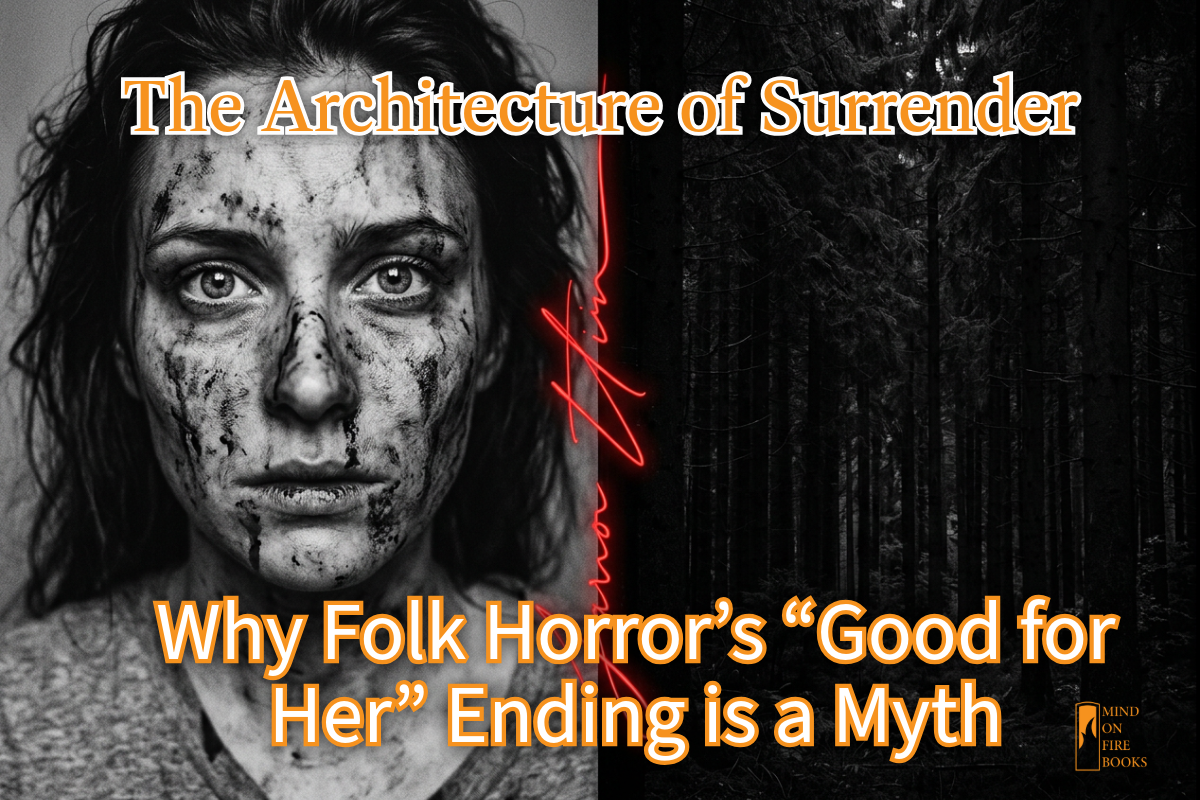
We need to stop equating capitulation with liberation. The folk horror good for her myth complicates how we interpret these narratives in popular culture.
There is a reigning cultural consensus currently dominating modern dark fantasy and folk horror film discussions. You know the narrative by heart:
We watch the persecuted woman cast off the suffocating hegemony of puritanical patriarchy. Then, we watch her walk—bleeding, traumatized, but unbroken—into the dark woods to embrace a primal, forbidden magic. We construct memes about Black Phillip. We applaud the dark-cottagecore aesthetic of her rebellion and simply type, “Good for her” into comment sections and log off feeling a profound sense of vicarious agency.
But if we strip away the dark aesthetic and apply a scalpel to the actual mechanics of power in stories like Robert Eggers’ The Witch or Brom’s Slewfoot, we uncover an uncomfortable truth.
This isn’t female empowerment. It is a masterclass in coerced surrender.

1. The Illusion of Sovereignty
To understand why the “Good for Her” trope is a structural trap, we have to talk about genuine sovereignty. True agency requires the capacity to choose otherwise. When we frame a protagonist’s choice to sign the Devil’s book as a radical reclamation of self, we are fundamentally misreading how predatory power operates.
Let’s look at the transaction.
Thomasin did not outmaneuver the Devil. The Devil did not invite her to a summit to negotiate a treaty as equals. Instead, he operated as an apex predator, waiting patiently at the edge of the tree line while the mortal patriarchy did the grueling, systemic work of dismantling her.
She was systematically starved, isolated, alienated, gaslit, and driven to the absolute edge of human sanity by her father’s Calvinist hubris. Only when she was entirely stripped of resources, family, and physical safety did the Devil present his contract.
That isn’t a negotiation. That is an acquisition.
       [ SYSTEMIC DESTRUCTION ]
  Calvinist Dogma ──► Isolation ──► Starvation ──► Total Trauma
                                                       │
                                                       ▼
       [ THE PREDATORY ILLUSION ]
  The Devil Steps In ──► "Choice" Offered ──► Absolute Acquisition

2. Trading the Human Cage for the Cosmic Panopticon
When the protagonists of modern folk horror finally embrace the dark, they aren’t dismantling the master’s house. They are simply leasing a room in a darker, older panopticon.
In both The Witch and Slewfoot, the female leads trade the clumsy, mortal subjugation of religious zealots for the absolute, cosmic subjugation of primordial entities. They trade a human father or a magistrate who demands relentless obedience for an ancient master who demands relentless obedience.
Yes, the Devil offers Thomasin the taste of butter and a pretty dress. Yes, the horned god gives Abitha the power to burn her oppressors. But these are not gifts; they are the wages of eternal servitude.
To call this ultimate, inescapable submission a “triumph” is to view power through a deeply fractured lens. They haven’t beaten the system—they have simply surrendered to a higher, more competent authority.

3. The True Horror is Our Complicity
So, if the text is explicitly about systemic subjugation, why do we cheer when Thomasin floats above the fire? Why do we applaud when the woods swallow the village?
Because the genuine horror of the “Good for Her” ending does not lie on the screen or the page. It lies in the audience.
We are projecting our own structural exhaustion onto the narrative. We live in a modern reality defined by rigid systems of capital, endless performance, economic fragility, and invisible constraints. Our collective hunger for agency is so starved that we look at a woman losing her family, her humanity, and her eternal soul, and we instinctively think:
“Honestly? Still better than the alternative.”
The Mind on Fire Rule: We are so profoundly disenfranchised by our own modern hegemonies that we have romanticized eternal damnation and feral isolation as a form of extreme self-care. We have aestheticized our own powerlessness.
The Verdict: A Mirror to Our Exhaustion
Folk horror, when functioning at its highest, most devastating frequency, does not offer us a feminist victory. It offers us a brutal mirror.
It reminds us that in the face of ancient, indifferent power, we do not conquer the woods. We do not outsmart the Devil. We are simply digested by them. And the fact that we sit in the dark and smile while it happens is the most terrifying plot twist of all.
Join the Fire
Where do you stand? Does the “Good for Her” trope still hold up as a triumph of female agency, or are we just cheering for a different flavor of doom?
Drop your thoughts in the comments below—let’s spark the debate.
Thank you for visiting with us. For more Reviews or Literature related content, visit our blog at The Ritual. Copyright Mind on Fire Books.



Leave a Reply