
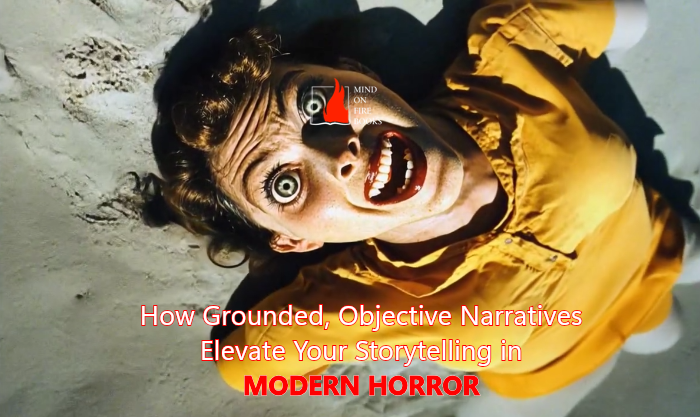
In the ever-evolving world of modern horror, the stories that linger are those that blur the line between the conceivable and the unimaginable. Horror has found a way to intensify fear by grounding it in reality—using objective, rational narrators to present the supernatural in a believable light. This approach resonates with contemporary readers who appreciate a logical framework, making the horror not just palpable but deeply unsettling.
“The oldest and strongest emotion of mankind is fear, and the oldest and strongest kind of fear is fear of the unknown.” — H.P. Lovecraft
Cover photo by Dyu – Ha on Unsplash. Affiliate links included in this article.
Victorian Ghost Stories vs. Modern Horror Tales
Back in the Victorian era, ghost stories often hinged on personal anecdotes and direct expressions of skepticism or belief. Narrators would say things like, “I am not a believer in ghosts in general,” or boldly claim, “This is a ghost story. Every word of it is true.” These tales unfolded through intimate conversations, with characters sharing their supernatural experiences firsthand.
While these stories have their charm, modern horror takes a different route. Instead of relying on personal belief, contemporary tales employ objective narrators—logical, often scholarly individuals who document events with a rational eye. This shift not only adds credibility but also amplifies the fear by making the impossible seem possible.
Let’s dive into three standout stories that exemplify this approach: Ray Bradbury’s “The Fog Horn,” T.E.D. Klein’s “The Events at Poroth Farm,” and H.P. Lovecraft’s “The Call of Cthulhu.”
“The Fog Horn” by Ray Bradbury
In “The Fog Horn,” we meet Johnny and his boss, McDunn, who man a remote lighthouse. One evening, McDunn shares a haunting observation with Johnny—a sea creature has been visiting the lighthouse, drawn by the mournful wail of the fog horn. Skeptical yet curious, Johnny witnesses the creature’s arrival that night. The beast emerges from the depths, seemingly communicating with the fog horn, mistaking it for one of its own.
When McDunn turns off the fog horn, the creature, perhaps feeling rejected, destroys the lighthouse in a fit of rage or sorrow. The men survive by seeking refuge in the cellar. When authorities investigate, McDunn provides a logical explanation: the waves took down the lighthouse. His objective demeanor and scientific musings throughout the story make the extraordinary event eerily plausible.
“The Events at Poroth Farm” by T.E.D. Klein
In “The Events at Poroth Farm,” Jeremy, a college lecturer, retreats to a rural farm for the summer to prepare for a new course. Surrounded by the simplicity of farm life, he immerses himself in horror literature. Soon, the lines between fiction and reality begin to blur.
Jeremy discovers the farm’s cat, seemingly dead in the woods, only for it to reappear alive but acting strangely. The cat attacks the farmer’s wife, Deborah, leading to a series of unsettling events. As Deborah’s behavior changes and paranoia grips the farm, Jeremy’s logical observations and rational attempts to make sense of the madness heighten the sense of dread. His academic perspective makes the descent into horror all the more convincing.
Based on your taste in literature, I think we could be good friends. Sign up below for emails and free eBook giveaways.

“The Call of Cthulhu” by H.P. Lovecraft
H.P. Lovecraft’s “The Call of Cthulhu“ introduces us to Francis Thurston, who inherits his late grand-uncle’s papers and a peculiar clay bas-relief depicting a monstrous entity. The documents unveil a labyrinth of scholarly research, police reports, and eyewitness accounts all pointing toward the existence of an ancient cult worshipping the cosmic entity Cthulhu.
Thurston approaches the mystery with a meticulous, almost scientific method, piecing together clues from around the world. His objective narration through journal entries and documented evidence blurs the lines between reality and the supernatural. By the story’s end, the assembled facts make the existence of Cthulhu disturbingly plausible, leaving both Thurston and the reader questioning the nature of reality.
Why Objectivity Amplifies Horror
So, why does an objective narrative make horror more effective? It’s simple: when logical, rational characters encounter the inexplicable, it feels more authentic. There’s no easy dismissal as mere superstition. Instead, readers are confronted with the possibility that such horrors could exist within the logical framework of our world.
By grounding supernatural events in reality, these stories tap into deep-seated fears of the unknown and the unknowable. The meticulous documentation, scientific reasoning, and absence of overtly fantastical elements make the horror resonate on a personal level.
Grounded Modern Horror
Modern horror thrives on this delicate balance between the rational and the supernatural. By using objective narrators, authors like Bradbury, Klein, and Lovecraft craft stories that don’t just scare us—they make us question the very nature of reality.
So, next time you’re delving into a chilling tale, pay attention to the narrator’s perspective. It might just be the key that unlocks a deeper, more unsettling layer of fear.
Unearth More Bookish Treasures


6 Coasters with Complete Novels by Bronte Sisters
Based on your taste in literature, I think we could be good friends. Sign up below for emails and free eBook giveaways.
What’s Your Take on Modern Horror?
Do you have a favorite horror story that uses an objective narrative to heighten the fear? Share your thoughts in the comments below! Let’s explore how logic and reason can make the supernatural even more terrifying.
Interested in more literary insights? Check out our other posts on how narrative techniques shape the horror genre!
More Modern Horror Fiction by the authors mentioned above!
By Ray Bradbury
- “Bradbury Stories: 100 of His Most Celebrated Tales“ – A comprehensive collection of Ray Bradbury’s stories.
- “The Illustrated Man” by Ray Bradbury – Another classic collection of Bradbury’s short stories.
- “Fahrenheit 451″ by Ray Bradbury – One of Bradbury’s most famous novels, available in various formats.
By T.E.D. Klein
- “Dark Gods” by T.E.D. Klein – A collection of four novellas, including “The Events at Poroth Farm.”
- “The Ceremonies” by T.E.D. Klein – Another horror novel by Klein.
By H.P. Lovecraft or similar
- “The Necronomicon: The Wanderings of Alhazred“ – A fictional grimoire often associated with Lovecraft’s works.
- “At the Mountains of Madness” by H.P. Lovecraft – Another one of Lovecraft’s famous stories.
- “The Complete Cthulhu Mythos“ – A comprehensive collection of Lovecraft’s works related to the Cthulhu Mythos.
Thank you for visiting with us. For more Writers and Rhetoric related content, visit our blog at The Ritual.
Unearth More Bookish Treasures


Spread the word

Enjoyed the Chat? Don’t Leave Without “Digital Fangs.”
Thanks for diving deep into the world of Folk Body Horror! If you want more unsettling tales where the body mutates and the land has a claim, join the Mind on Fire insider list today. As a welcome gift, I’ll send you “Digital Fangs,” a complete, dark story from the Folklore and Flesh collection—absolutely free!
GIVE ME MY FREE STORY NOW

Leave a Reply