
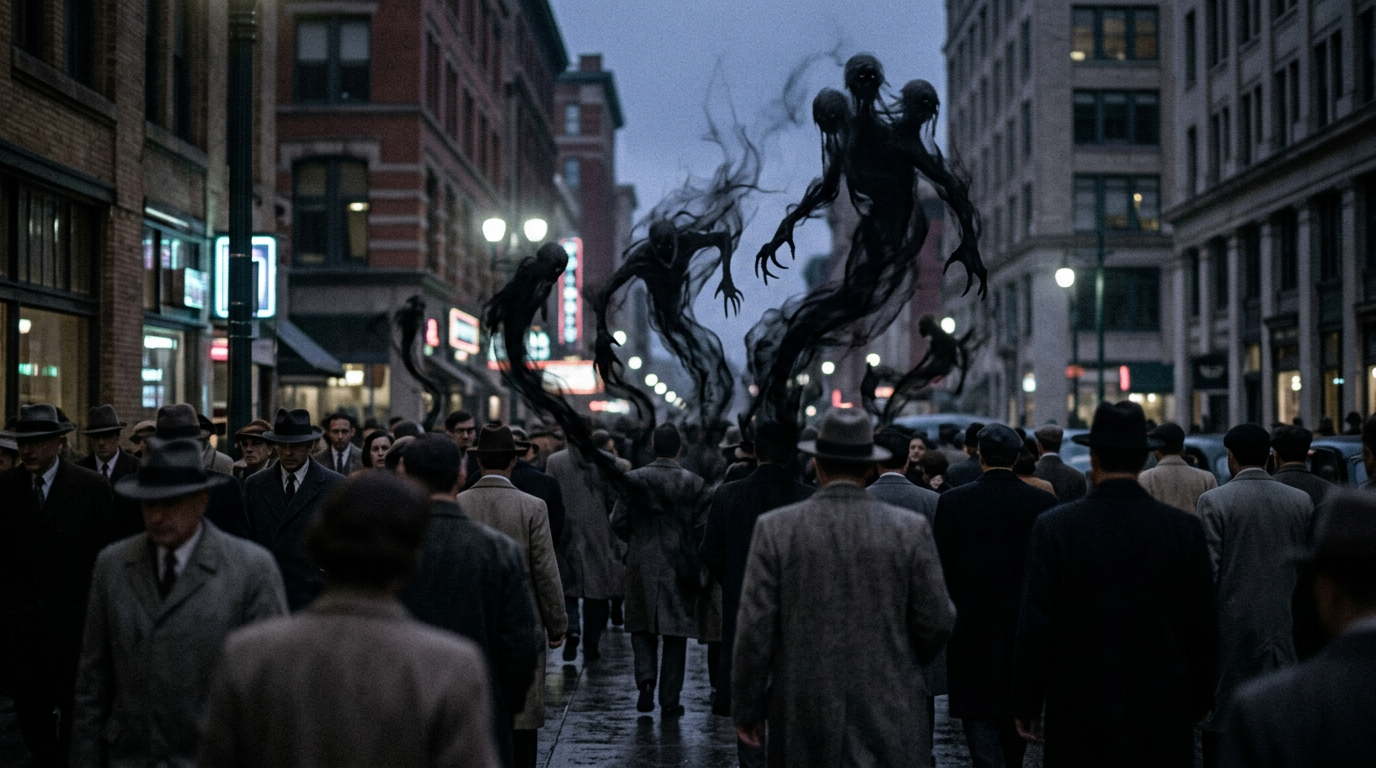
It’s 5:00 AM on a Tuesday. The world outside is at its quietest, but do not mistake that silence for peace. For those of us who study the dark—who map the contours of dread and the anatomy of the abyss—we know that silence is exactly where the foundation begins to crack. Understanding Why We Fear can reveal the origins of these cracks and the shape of what lives beneath them.
In my work as an author of dark fiction and a student of discourse, I’ve learned one immutable truth: The most dangerous monsters don’t roar. They quietly replace the floorboards while you’re looking at the ceiling. The reason people often overlook the quiet danger is rooted in why we fear what we cannot see.
We are currently living through a masterclass in atmospheric horror. The question isn’t whether the “monster”—be it systemic instability, economic volatility, or social erosion—is coming. The question is why we’ve been persuaded to ignore it—and exploring this means examining what motivates fear itself.
The Rhetoric of Fear: More Than Just an Emotion
Sociologist Barry Glassner, in his essential work The Culture of Fear, argues that we are frequently manipulated into fearing the wrong things. We are conditioned to panic over rare, sensationalized threats—”stranger danger,” exotic diseases, or isolated incidents—while the structural threats (crumbling infrastructure, growing inequality, systemic fragility) are treated as background noise. Examining why we fear manipulated threats versus real ones may help us reclaim agency.
As a student of rhetoric, I see this as a narrative trap. It is the “Unreliable Narrator” technique applied to real life. When the news cycles focus on the ephemeral, they aren’t just informing you; they are distracting you from the encroaching rot. They are using the rhetoric of fear to keep you looking at the shadow on the wall, so you never notice the creature in the room. More broadly, pondering why we fear shadows instead of substance reveals the power of distraction.

The Anatomy of Fragility
In historical collapse theory, scholars like Joseph Tainter have long noted that as societies become more complex, they become inherently more fragile—a phenomenon often called “complexity overhang.” Grappling with the question of why we fear collapse, even as complexity increases, underscores our avoidance of fragility.
Think of it like a horror story’s “False Sanctuary.” We believe our institutions—our supply chains, our digital grids, our social safety nets—are castles. We treat them as immovable. But in the dark fiction of our reality, the castle is always the first thing to fall because its inhabitants stopped checking the mortar. It’s a classic scenario: we ignore protection because we do not confront why we fear instability.
When we ignore the warnings of our own system’s fragility, we aren’t being “optimistic.” We are being complicit in our own narrative decline. For some, the willingness to remain blind stems from an unwillingness to face why we fear the inevitable fracture.

Where the Monsters Actually Lay
If you want to find where the monsters are hiding in your own life, stop looking at the villains and start looking at the gaps in your consensus. For these gaps, it is instructive to reflect on why we fear acknowledging uncomfortable truths.
The true monsters are made of apathy and inertia. They are the moments where we collectively agree that the failing lights are “just how things are now.” They are the rhetorical tricks that convince you that your anxiety is a personal pathology rather than a rational response to a crumbling environment. Additionally, these monsters feed off the reasons why we fear change and choose comfort over action.
Becoming the Protagonist of Your Own Survival
In dark fantasy, the character who survives is the one who accepts the horror first. They don’t waste time wishing the monster didn’t exist; they start looking for a weapon. Facing adversity often means confronting why we fear the unknown so we can move beyond paralysis.
- Read the Subtext: Stop listening to what is being said by the media and start looking at what is being implied. Where is the silence the heaviest? That is where the danger—and the opportunity—lies. When silence dominates, ask yourself why we fear what lies beneath.
- Define Your Perimeter: Audit your life. What is essential? What is merely an attachment to a failing system? In this process, consider what makes us afraid to let go.
- Claim the Narrative: Do not let the prevailing discourse dictate your emotional state. If the “official” story feels like a lie, trust your eyes. The student of rhetoric knows that the one who defines the terms controls the reality. Remember that understanding why we fear manipulations allows us to reclaim our story.
The abyss doesn’t just stare back; it waits. It waits for you to go back to sleep. My advice? Stay awake. Learn to see in the dark, especially when facing the roots of why we fear.

Are you ready to stop being a background character in someone else’s narrative? Subscribe to the Mind on Fire newsletter for weekly dispatches from the edge of the abyss.
- Read my latest dark fiction release, Folklore and Flesh, to see these rhetorical theories in practice. And remember, confronting why we fear the unknown is often the first step toward overcoming it.
- Comment below: What is one “monster” you see hiding in plain sight that others are too afraid to name? In your answer, reflect on why we fear shining a light on these monsters.




Leave a Reply