

Folk horror is about what the place believes. Within this tradition, folk body horror explores how rural beliefs and customs manifest in unsettling, physical ways.
Body horror is about what the body becomes.
Folk Body Horror is where those two have a very bad meeting in the woods and one of them doesn’t come back human.
I’ve been calling my work Folk Body Horror for three years because I needed a name for the specific dread that keeps me up at 3am. Not “cabin in the woods with creepy villagers” and not “Cronenberg with a lot of slime” — but the moment when an old ritual gets under your skin and decides to redecorate from the inside.
And in 2026, everyone is suddenly building in my weird little neighborhood.

The Bones: What It Is (And What It Isn’t)
Folk Horror: The land has rules. You broke them. The villagers knew. Midsommar, The Wicker Man.
Body Horror: The body has rules. It broke them. You watch. The Fly, Titane.
Folk Body Horror: The land’s rules rewrite the body’s rules. The ritual doesn’t just kill you. It repurposes you.
Your ancestors didn’t invent rituals to honor the earth; they invented them to keep the rot at bay. Sometimes the rot wins and wears you home.
That’s the whole thesis of Folklore and Flesh — 125 pages, zero filler, pure concentrated dread. Ten stories where transformation isn’t a metaphor, it’s an anatomy lesson.
10 Transformations That Prove We’re Obsessed
Hollywood is doing it now because we’re all feeling it: the world is changing faster than our bodies can.
Here are the transformations I keep seeing, and where I tried to map them myself:
1. Grief into Archive
The Whispering Bone Orchard — A grieving mother goes to a shaman in a haunted grove and becomes the village’s living archive. She wanted to remember her child. The grove wanted a librarian.
2. Man into Swarm
Echoes of the Apiary — Loneliness pulls a beekeeper into the hive’s collective mind until man and swarm are one appetite. You don’t get stung. You get recruited.
3. Human into Machine
The Drone’s Metamorphosis — A frontline operator wakes to find his mind trapped in the machine he used to fly. Folk horror usually has scarecrows. We have drones.
4. Beauty into Predator
Digital Fangs — A beauty influencer’s viral tooth serum unlocks something hungry in her followers — and then in her jaw. The most 2026 sentence I’ve ever written. Read it for free here: Folklore and Flesh – Mind on Fire Books
5. Memory into Material
Clay and Memory — A widower tries an AI therapist and a “quantum clay” ritual. His memories leave first. His name is next. Grief as erasure.
6. Vengeance into Second Mouth
Hannah and the Demon’s Canvas — In the ruins of Nagasaki, Hana Takahashi trades grief for a second mouth and a vengeance that will not stay buried. Some grief doesn’t want healing. It wants teeth.
7. History into Host
Cursed Collection — Two archaeologists steal relics meant to rewrite history and wake something older than the empires they came to loot. The past doesn’t want to be studied. It wants to be fed.
8. Gold into Underworld
The Siguanaba — A conquistador chasing gold into the underworld meets a shape-shifting legend that has been waiting. She was folklore to him. He was lunch to her.
9. Drought into Offering
The Day the Rain Tore Us Apart — A drought-struck village chooses children for a rain rite. The weather comes. So does the change. You get what you pray for. You just don’t get to stay you.
10. Night Out into Food Chain
Dark Vintage — A night at a rural winery becomes a feast. Predator and prey are separated by the width of a glass stem. My love letter to the fact that fermentation is controlled rot.
Plus twelve poems and micro-fictions on ritual, transformation, and the point where the human form stops being a given.

The Real Monster: Why Now?
Why is Folk Body Horror exploding in 2026?
Because folk horror used to be about outsiders visiting a weird village. Now we all live in the weird village. The climate is weird, the tech is weird, the economy is weird. The old rules don’t work.
And body horror used to be about disease. Now we all know our bodies are porous — to microplastics, to algorithms, to grief, to the hive.
Folk Body Horror says: the ritual isn’t over there. The ritual is you, changing, in real time, with no consent form.
That’s why a movie like A Possession in Lincoln County — a man documenting his wife’s terminal illness who turns to a ritual — hits so hard right now. It’s not about a demon, it’s about a folk ritual trying to fix a body that modern medicine has abandoned. It’s Folk Body Horror without calling itself that.
Final Sip
I score Folk Body Horror as a movement: ☕☕☕☕☕
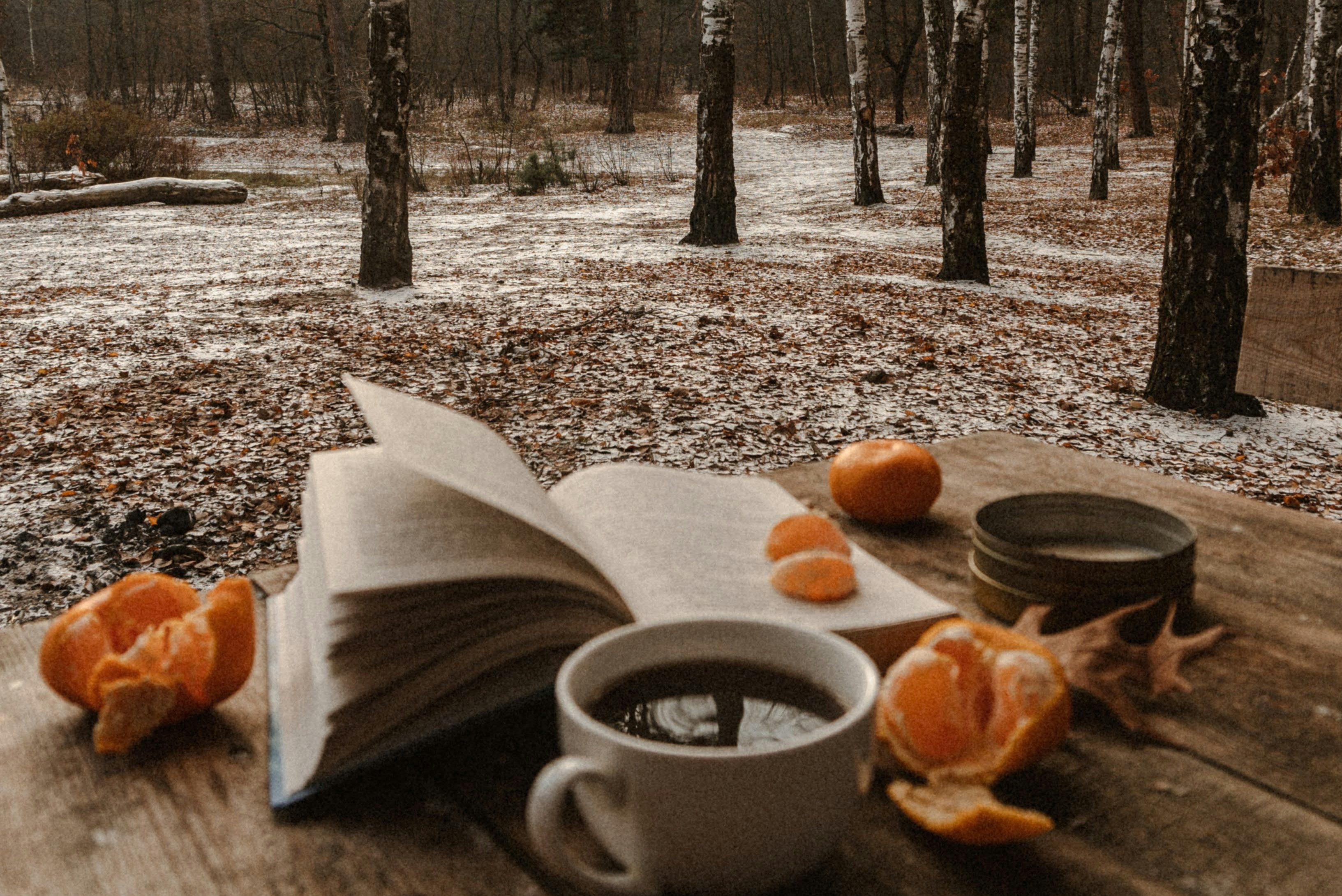
Five mugs because I created it, LOL. And also, because it’s the only horror subgenre that doesn’t let you leave your body at the door. You bring it with you. And it comes back different.
If you want to study the anatomy of a curse up close — the hand-stamped, signed paperback of Folklore and Flesh is $6.66 on my site this October (2026) because Amazon gets our leftovers and I’m not looking for casual browsers. I’m looking for hunters.
You get the artifact and the ebook. And you get entry into the inner circle dispatch — no spam, just grit and intellectual ammunition once a month.
So — what’s your favorite transformation? The one where you become more, or the one where you become less?
Thank you for visiting with us. For more Reviews or Literature related content, visit our blog at The Ritual. Copyright Mind on Fire Books.



Leave a Reply